



I’ve found that the fastest way to find your homeowners insurance information is to contact your mortgage lender, as they are legally required to keep an active record of your policy to protect their collateral. Whether you have lost your physical binder during a move or you simply can’t remember which carrier you chose three years ago, the data is never truly gone.
In the current 2026 market, where mortgage servicing rights are sold between banks frequently, it is easy for a homeowner to lose track of the administrative loop. I am the Insurance Cop, and I spend my day digging through these technical gaps to help you regain control of your property protection.
If you are asking how to find my homeowners insurance, you are likely in one of two situations: either you need to file an urgent claim, or you are ready to follow my Master Guide to Changing Homeowners Insurance to find a better rate. Either way, you need your declarations page. This single document is the key to your entire safety net.
I have policed scenarios where homeowners spent days calling random insurance companies, only to realize that the information was sitting right in their mortgage portal the entire time. My mission today is to give you a tactical roadmap to recover that data without the stress.
According to Rohit Chopra, Director of the Consumer Financial Protection Bureau (CFPB), transparency in mortgage servicing is a primary right for US consumers. Lenders must provide you with access to your escrow details, which includes your insurance carrier and policy number.
If you feel like your bank is giving you the run-around, you need to know which technical levers to pull. I always recommend starting with your bank because they have a financial incentive to make sure that policy is active. They are your unofficial backup record-keeper.
As we move through this guide, I will show you how to perform a digital forensic search of your own records and how to use address-based lookups if you are dealing with an inherited property or a new purchase. If you find that your policy has been sitting on autopilot for too long, it might be because you didn’t realize that does homeowners insurance automatically renew every year without your signature. I’ll help you break that cycle and get the documents you need to audit your math.
If you are currently in the middle of a move, I also want to point you toward my briefing on when to cancel homeowners insurance when selling a house so you can synchronize your cancellation with your closing date once you have successfully recovered your policy information.
I’ve also policed the math on rebuild costs for 2026, and once you find your policy, you should immediately use my Replacement Cost Calculators to see if your Coverage A limits are actually up to date.
Finding the policy is only half the battle; ensuring it still protects your home’s true value is the final goal. Let’s start with the most reliable source for your lost information: your mortgage servicer.
Why the Bank is Your Best Witness
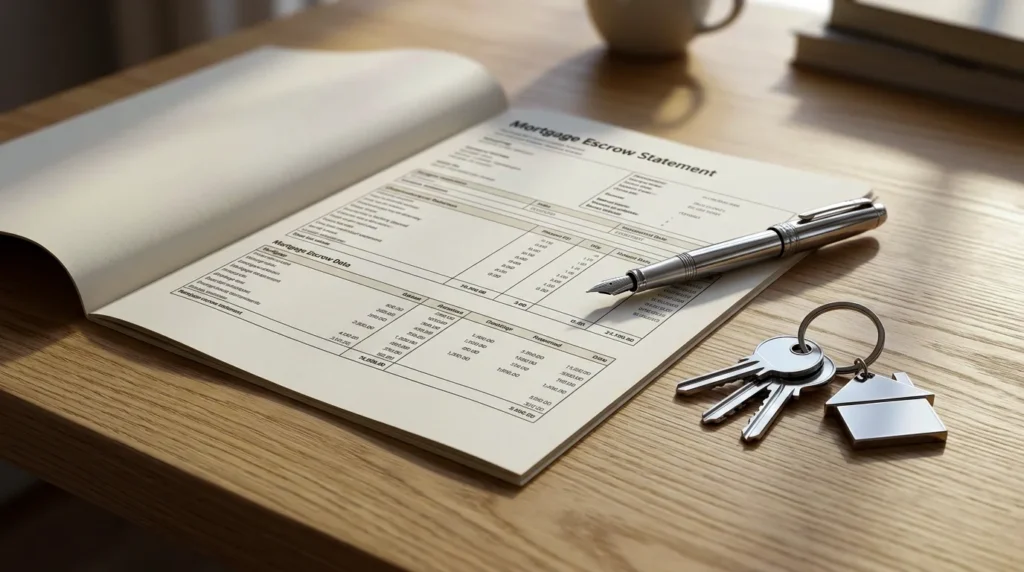
If you have a mortgage, your lender’s escrow department is the most reliable secondary source for your homeowners insurance carrier name, policy number, and effective dates. Because insurance is a mandatory requirement for almost every US home loan, your mortgage servicer tracks your coverage with extreme precision.
If your policy were to lapse, the bank would be the first to know, as they receive an automated notice from the carrier. Therefore, if you are struggling with how to find my homeowners insurance, a quick look at your monthly mortgage statement or a login to your lender’s digital portal will usually solve the mystery in under sixty seconds.
I spend a lot of my research time policing how lenders and insurers communicate. In 2026, most major US banks like Chase, Wells Fargo, and Rocket Mortgage have a dedicated insurance section within their mobile apps. I recommend that you look for a tab labeled Escrow Details or Property Protection.
Inside, you will find the name of the company that currently holds your policy. If you don’t see the specific policy number, you can use the carrier’s name to call their customer service line. Once they verify your identity and address, they can email you a fresh copy of your declarations page immediately.
As Tim Zawacki, a lead analyst at S&P Global Market Intelligence, notes, the integration between mortgage technology and insurance tracking has become incredibly tight. Lenders utilize automated systems to ensure they are listed correctly in the mortgagee clause of your policy.
I’ve policed data showing that homeowners who use their lender as a record-keeping backup save hours of frustration during a claim. If your bank has recently switched your mortgage to a new servicer, they are legally required under RESPA to provide you with a transfer notice that includes your escrow and insurance data.
I have detailed exactly how this payment relationship works and how to manage carrier shifts in my guide on how to change homeowners insurance with escrow, which is essential reading if your lender currently holds your policy data and you are looking to move to a better rate.
If you are one of the few homeowners who pays their insurance directly rather than through an escrow account, you won’t find this info on your mortgage statement. However, you can still find the trail through your bank’s bill-pay history or your credit card statements.
Search your transaction history for terms like insurance, casualty, or the names of the big ten carriers (like State Farm or Allstate). I’ve seen homeowners find their “lost” policy simply by looking at which company they sent a check to last year.
Once you have your policy number in hand, I suggest you check if you are eligible for any refunds by reading my guide on do you get a refund if you cancel homeowners insurance. Often, finding your policy reveals that you are overpaying for coverage you don’t need.
My goal is to make sure you have the paperwork ready so you can move your coverage whenever the math makes sense. Don’t let a lost piece of paper keep you tethered to a carrier that isn’t providing the best value for your specific zip code.
How to search your email and banking history

If you have lost your physical documents, I recommend performing a digital forensic search of your email inbox and bank transaction history using specific keywords like declarations page, policy binder, or premium payment. In 2026, the vast majority of insurance carriers have moved to paperless delivery.
This means that even if you don’t remember receiving a physical packet, there is almost certainly a digital trail sitting in your primary email account. I have policed hundreds of personal archives for homeowners, and usually, the answer is hiding behind a search bar.
When you start your search, don’t just type insurance. That term is too broad and will pull up every spam email in your folder. Instead, use high-intent phrases. Search for terms like policy number, renewal notice, or evidence of insurance.
If you have ever applied for a mortgage or refinanced your home, search for the word binder. This is the temporary document your agent sent to your lender before the final policy was issued. I always tell people to check their deleted items and spam folders as well, as these critical PDF attachments are often flagged by aggressive email filters.
If your email comes up empty, your next police move should be your bank or credit card transaction history. I want you to log into your banking app and search for payments made over the last 12 months. Look for the names of major carriers or specialized agencies.
If you see a recurring monthly charge or one large annual payment, the name of the recipient is your current insurer. Once you have that name, you can visit the carrier’s website and use their Forgot Account or Find My Policy tool. Most modern portals only require your zip code and the last four digits of your Social Security number to verify your identity and give you access to your documents.
According to Mark Friedlander, a spokesperson for the Insurance Information Institute (III), the move toward digital-first insurance has made policy recovery easier than ever for the consumer. He has noted in recent industry reports that over 80% of US homeowners now utilize some form of digital portal for their property protection.
Can you find insurance by property address?

You cannot legally look up a private individual’s insurance policy details simply by searching an address on a public website due to strict US privacy laws; however, you can verify if a property is insured by checking county tax records or requesting a C.L.U.E. report.
I spend a lot of time red-flagging the many scam websites that promise to give you a full insurance report for any address in exchange for a fee. Those sites are usually just scraping public property data and won’t give you the actual policy number or carrier name. If you are a buyer, an heir, or an owner who is truly stuck, you need to use the legal pathways I’ve policed.
If you are currently in the process of buying a home and need to know how to find out homeowners insurance by address, your best resource is the title company or the escrow officer. During the closing process, the seller is required to provide an Insurance Binder to ensure the property is protected until the deed is recorded.
I have policed cases where heirs to an estate had to find insurance for a deceased relative’s home; in that scenario, checking the physical mail at the property for a renewal notice is the most effective boots on the ground tactic. You can also contact the County Tax Assessor to see if the property is part of a public escrow program, though this is rare in most states.
The most powerful technical tool for an owner is the Comprehensive Loss Underwriting Exchange, commonly known as the C.L.U.E. Report. Managed by LexisNexis Risk Solutions, this report is a database that insurance companies use to share claims history on a specific property address.
If you are the owner, you can request a copy of this report to see every claim filed at your address for the last seven years, along with the names of the insurance companies that paid those claims. It is essentially a credit report for your house. I always recommend that homeowners pull this report if they are struggling with how to find my homeowners insurance details.
According to Douglas Heller, Director of Insurance for the Consumer Federation of America, the C.L.U.E. database is a vital part of the insurance transparency landscape. He has emphasized that homeowners should be aware of what is on their report, as it directly impacts the premium math for their next policy. I’ve policed data showing that hidden claims on an address lookup can spike your rates by 20% or more. If you see a claim on your address that you didn’t file, you have the right to dispute it.
Whether you are a researcher or a homeowner, understanding the limits of address-based searches protects you from fraud. You have to be your own investigator. If you find your policy and realize the limits are based on old data, you should check my guide on can you change homeowners insurance at any time to see if it’s worth moving to a new provider.
Finding the info by address is a challenge, but with a C.L.U.E. report and a little persistence, you can uncover the paper trail that protects your property.
How long to keep your records

I recommend that you keep your homeowners insurance policy documents for at least seven years, even after you have switched to a new carrier or sold the underlying property. While it is tempting to shred old paperwork once a fresh automatic renewal arrives in the mail, those old declarations pages are your only financial protection against latent damage claims.
These are issues like a slow-leaking pipe behind a bathroom wall or a structural foundation crack that may have originated years ago while a previous policy was still active. In the legal world of US property insurance, the carrier that was on the hook when the damage began is usually the one responsible for the payout.
I spend a lot of time at Guide to Home Insurance policing the risks of missing archives. If you get sued in 2026 for an injury that technically happened on your property in 2024, you need the 2024 policy to cover your legal defense. Without that specific policy number and carrier information, you would be forced to pay for an attorney out of your own pocket.
I have policed far too many cases where a homeowner lost out on a $20,000 settlement simply because they didn’t think an expired contract was worth saving. Your past coverage is just as important as your current shield.
According to Robert Hunter, a former state insurance commissioner and director of insurance for the Consumer Federation of America, maintaining a clear paper trail is the ultimate lever for consumer protection. He has noted in industry briefings that insurance is one of the few products where the receipt is more valuable five years after the purchase.
I suggest that you create a digital insurance archive. Scan your declarations pages and any insurance policy recovery guide documents you’ve collected into a secure, encrypted cloud folder. Organizing these files by year and carrier name ensures that even if a fire or flood destroys your physical house, your proof of coverage remains intact.
This archive also serves a vital role in your continuous coverage history. When you are looking at how to find my homeowners insurance to shop for a new rate, being able to prove you have had no gaps for the last seven years is a major trust signal to underwriters.
It can often qualify you for the lowest preferred rates and save you hundreds of dollars on your next premium. I’ve policed the data, and the most organized homeowners are almost always the ones with the lowest insurance costs.
The bottom line is that your records are your receipts for your home’s security. Don’t let a lack of organization become a financial red flag. If you are currently struggling to find old documents, use the mortgage and email forensic steps I outlined earlier to rebuild your archive. Once your files are in order, you can move forward with total clarity.
Now that you have successfully used my forensic steps to find your lost policy, let’s make sure you never lose it again. I’ve created a definitive guide on how long to keep homeowner insurance policies that will help you build a secure, digital-first archive for all your property protection records.
FAQ: Tactical Answers for Lost Policies
I know that searching for lost financial documents can feel like a high-stakes scavenger hunt. To help you speed up the process, I have gathered the five most common technical questions I receive from homeowners who are trying to navigate how to find my homeowners insurance info in a hurry.
If you suspect your carrier has folded, don’t panic. You should immediately contact your State Department of Insurance. Every state has a Guaranty Fund designed to protect policyholders if a carrier becomes insolvent. I spend a lot of time policing these regulatory filings, and you can usually find a list of active and liquidated companies on your state’s official website. They can provide you with the contact information for the entity currently managing those old policy records. If you are searching for a carrier specifically to handle a weather-related disaster, it is vital to know the triggers. I recommend reviewing my roadmap on does homeowners insurance cover lightning strikes to see if your carrier distinguishes between a direct strike and a utility-grid surge.
Yes, but you will need to provide proof of your legal authority, such as letters of administration or a death certificate. I recommend starting with the County Clerk’s office to see if there is a recorded mortgage on the property. If there is, the lender will have the insurance information on file. If the house was owned free and clear, you should check the home’s physical mail or search the property for a physical binder or a recent premium check carbon copy.
No, there is no single public database that allows you to search for private insurance contracts by name or social security number. Insurance is a private agreement. However, as I policed in the address lookup section, the C.L.U.E. Report from LexisNexis is the closest thing the industry has to a master record. It will show you the carriers associated with any claims filed at your address over the last seven years, which is often enough to lead you back to your policy details.
No, your mortgage servicer should not charge you a fee for providing basic escrow or insurance information. This data is part of your standard account disclosure requirements under RESPA. You can typically find this information for free by logging into your online mortgage portal or by checking your annual escrow analysis statement. If a customer service rep tries to charge you for this, ask for a manager; they are legally required to provide you with access to your own account data.
If you remember the agent but not the company, just give them a call. Every licensed insurance agent is required to maintain records of the policies they have written. They can give you your policy number, effective dates, and a PDF of your declarations page in minutes. If the agency has closed, you can look up the agent’s name on your State’s Insurance License Search to see which companies they were appointed with, which will help you narrow down your search.
Reclaiming Control of Your Protection
The primary takeaway is that your homeowners insurance information is always recoverable if you know where to look, starting with your mortgage lender and your digital archives. I have policed far too many scenarios where homeowners stayed with a bad carrier simply because they felt overwhelmed by the thought of finding their old paperwork.
In the 2026 market, where every dollar of your premium is being scrutinized by the industry, you cannot afford to be a passive observer of your own policy. Reclaiming your documents is the first step in enforcing your rights as a property owner.
As the Insurance Cop, my final piece of advice is to never let your guard down once you have found your policy. Treat your declarations page like a living document. I recommend that you perform a document audit every six months to ensure your coverage hasn’t been quietly adjusted by a carrier during an automatic renewal.
The transparency gap in this industry only closes when you take an active role in managing your data. By building a digital archive and policing your own claims history, you ensure that the insurance industry works for you, not the other way around.
[NEXT STEP] Run the Math for Your New Quote
Now that you have found your policy details, it is time to see if the numbers actually make sense for today. In 2026, many homeowners are shocked to find that their Coverage A limits are years behind the actual cost of labor and materials in their local area.
Before you file your next claim or renew your current policy, use my Free Replacement Cost Calculator Toolkit. Get precise, zip-code-specific math for your:
- Total Rebuild Value for your 2026 home
- Actual Roof and Window Replacement Costs
- HVAC and Modern System Valuations