

Why You Need an Independent Guide to Homeowners Insurance Questions
For most families, a home is not just a place to live; it is their most significant financial investment and a cornerstone of their long-term stability. However, the legal contracts designed to protect that investment, homeowners insurance policies, are notoriously difficult to interpret. This creates a “transparency gap” where policyholders only begin to ask critical homeowners insurance questions after a disaster has already occurred, often discovering too late that their coverage is insufficient or their claim has been denied. The need for a truly independent resource has never been greater. When you search for homeowners insurance questions and answers online, most results lead to the marketing blogs of major insurance carriers. While these sites can offer basic information, they are fundamentally designed to minimize the company’s risk and market their own products. They rarely address the “fine print” or the specific homeowners insurance claim questions that might challenge their bottom line.

According to the National Association of Insurance Commissioners (NAIC), consumer education is the most effective way to prevent financial loss during a catastrophe. Guide to Home Insurance was founded to bridge this gap. We provide a neutral ground where you can find the answers to homeowners insurance coverage questions without the pressure of a sales pitch. By pulling data from state regulators, legal experts, and industry standards, we empower you to see past the jargon. Our goal is to ensure that you are armed with the right questions to ask about homeowners insurance today, so you aren’t left searching for answers in the middle of a crisis tomorrow.
Basic Questions to Ask About Homeowners Insurance

For most families, purchasing a home is the single largest financial commitment they will ever make. While buyers often spend weeks inspecting foundations and evaluating school districts, many spend only minutes choosing the insurance policy that protects that investment. To secure the best protection, you must approach the process with a structured list of questions to ask about homeowners insurance. Choosing a policy based solely on the lowest monthly premium is a common mistake that can lead to massive out-of-pocket costs later. When you are comparing quotes from different providers, your homeowners insurance questions should focus on the Actual Reality of a total loss. One of the most vital questions to ask about homeowners insurance is whether the policy is based on “Replacement Cost” or “Actual Cash Value.” This distinction determines whether you will receive enough money to rebuild your home at today’s construction prices or if you will only receive a depreciated amount that leaves you financially short.
Furthermore, proactive shoppers should ask about specific endorsements that may not be included in a standard quote. This includes homeowners insurance coverage questions regarding “Ordinance or Law” coverage, which pays for repairs required by updated local building codes, and “Sewer Backup” protection. According to the Insurance Information Institute (III), asking about higher deductibles or bundling options can often lower your premium more effectively than simply cutting out essential coverage. By resolving these homeowners insurance questions before you sign the contract, you ensure that your policy is a true safety net, not just a line item in your mortgage payment.
Homeowners Insurance Coverage Questions
Understanding what your policy actually covers is where many homeowners encounter their biggest frustrations. Insurance policies are often thick legal documents filled with specific definitions, clauses, and most importantly, exclusions. To avoid devastating financial surprises, it’s imperative to deeply explore your homeowners insurance coverage questions before a loss occurs. The difference between a “Named Peril” and an “Open Peril” could mean thousands of dollars in repairs coming out of your pocket.
Some of the most common homeowners insurance coverage questions revolve around:
Water Damage
Many assume all water damage is covered. However, standard policies often exclude damage from floods, surface water, or sewer backups unless you have specific endorsements. Our guides delve into how policies distinguish between sudden pipe bursts (often covered) and gradual leaks or mold growth (often excluded due to lack of maintenance).
Structural vs. Personal Property
Do you know if your detached garage or fence is covered under your “Dwelling” or “Other Structures” limit? Do you have enough “Personal Property” coverage to replace all your belongings at today’s market value, or will you only receive a depreciated amount?
High-Risk Peril
For homeowners in specific regions, homeowners insurance coverage questions about natural disasters like hurricanes, tornadoes, or wildfires are paramount. Many policies have separate, higher deductibles for these events or require entirely separate policies (e.g., flood insurance).
Liability
What if someone is injured on your property, or your tree falls on your neighbor’s house? Understanding your “Personal Liability” and “Medical Payments to Others” coverage limits is critical for protecting your assets beyond the physical structure of your home.
Common Homeowners Insurance Claim Questions
The true value of an insurance policy is never known until you file a claim. This “moment of truth” is often fraught with anxiety, as homeowners must navigate a complex bureaucracy while simultaneously managing the physical repair of their property. To secure a fair settlement, you must be prepared to resolve specific homeowners insurance claim questions regarding timelines, documentation, and your legal rights under the contract.
When a loss occurs, the burden of proof rests on the policyholder. This means you must be able to answer homeowners insurance questions from your adjuster with clear, verifiable evidence. Common points of contention include:
The Claims Timeline
How long should a claim take? While initial inspections often happen within 48 to 72 hours, major disasters can stretch the process into months. Understanding your state’s “prompt payment” laws is essential.
Documentation and Proof of Loss
What evidence is required to prove the value of your destroyed belongings? We help you resolve homeowners insurance claim questions regarding inventories, receipts, and the importance of photographic evidence taken immediately after the damage.
Actual Cash Value vs. Replacement Cost
Many disputes arise when a homeowner receives a check for significantly less than they expected. Our guides explain how depreciation is calculated and how you can recover those funds once repairs are complete.
Handling Denials
What do you do if a carrier denies coverage based on a “maintenance issue”? Resolving these homeowners insurance questions often requires invoking the “Appraisal Clause” or seeking help from a public adjuster.
According to United Policyholders (UP), an organized communication log is your most powerful tool during a dispute. By proactively addressing these homeowners insurance claim questions, you shift the power dynamic back in your favor. Our resources are designed to ensure you aren’t just reacting to the insurance company’s decisions, but actively managing your recovery process.
Geographic and State-Specific Questions
One of the most common misconceptions in property protection is that a standard policy is the same across the country. In reality, insurance is regulated at the state level, and the environmental risks of your specific geography dictate the terms of your contract. This means that homeowners insurance questions regarding mandatory coverage in Florida will have vastly different answers than those in Ohio or California. Understanding these regional nuances is vital for ensuring your policy actually matches the threats your home faces. When navigating our state-specific resources, your homeowners insurance coverage questions should focus on these regional variables:
Mandatory vs. Optional Coverage: In coastal states like Texas or North Carolina, separate windstorm or hail insurance may be required by lenders, whereas in the Midwest, these might be included in a standard policy.
State-Run Insurance Pools: If you live in a high-risk area for wildfires or hurricanes and have been denied by private carriers, you may need to ask homeowners insurance questions about “FAIR Plans” or state-backed insurers of last resort.
Statutory Requirements: Every state has different laws regarding how quickly an insurer must respond to a claim. Resolving homeowners insurance claim questions often requires knowing your local “Bill of Rights” for policyholders.
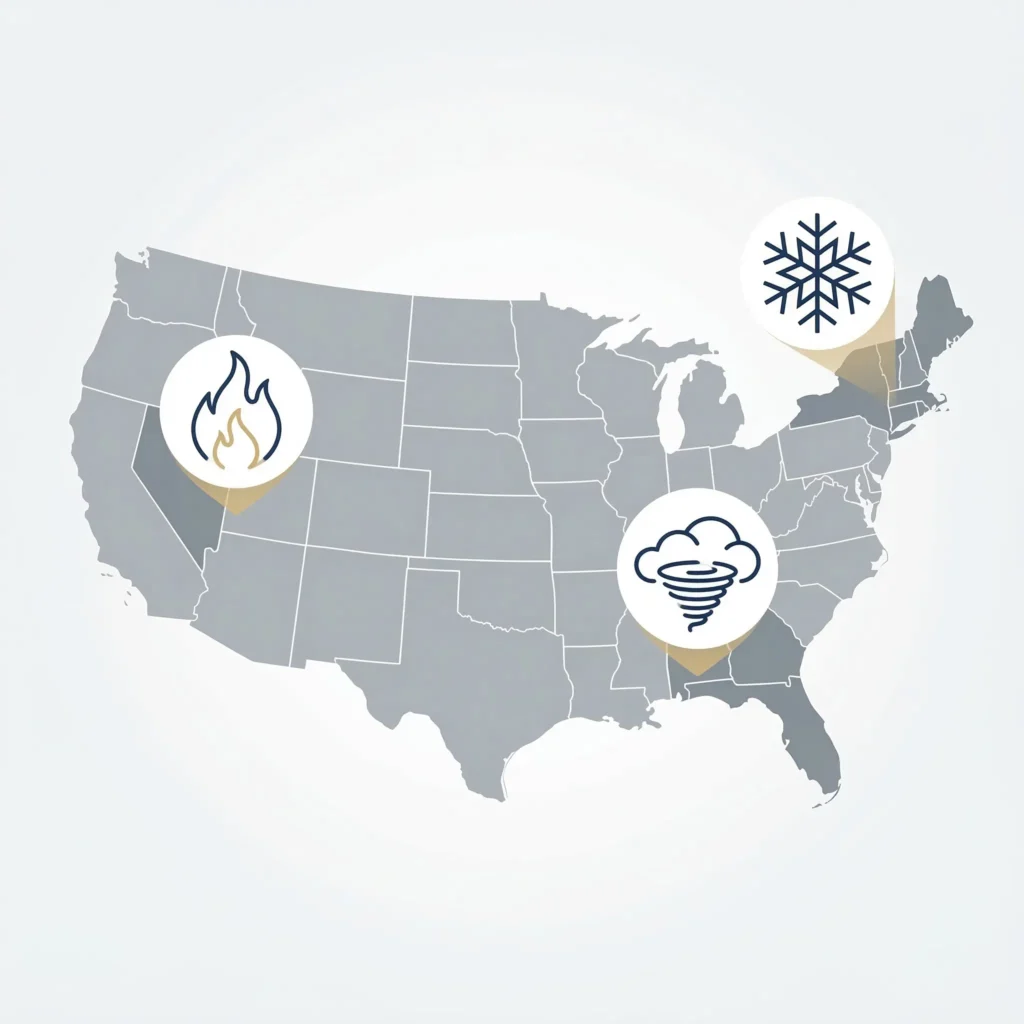
Environmental Hazards: Does your state require a specific earthquake endorsement? Is flood insurance managed through the NFIP in your flood zone? These are critical questions to ask about homeowners insurance to prevent a total financial loss after a localized disaster.
According to the National Association of Insurance Commissioners (NAIC), your local Department of Insurance is the final authority on how policies are underwritten in your area. Our state-by-state guides aggregate this data to provide localized homeowners insurance questions and answers. By focusing on the unique legal and environmental landscape of your region, we help you secure protection that is as unique as your home itself.
Our Resource Hub
The greatest barrier to resolving your homeowners insurance questions is often the dense, legalistic language used by insurance providers. Terms like “Subrogation,” “Loss Payee,” and “Open Perils” are not common in everyday conversation, yet they define the exact boundaries of your financial protection. When you don’t understand the jargon, it becomes impossible to identify the right questions to ask about homeowners insurance to ensure you aren’t leaving your family vulnerable to a denied claim.
To bridge this gap, we have developed a suite of high-utility tools designed to translate “legalese” into plain English. Our resources are built to empower you during every interaction with agents and adjusters:
The Home Insurance Glossary
This is our most visited resource, designed to provide clear homeowners insurance questions and answers for hundreds of technical terms. Whether you are reviewing a new policy binder or trying to interpret a renewal notice, our glossary ensures you understand the “fine print” before you sign.
The Property Insurance Claims Guide
Navigating a loss is when the most complex homeowners insurance claim questions arise. This step-by-step roadmap provides you with the tactical advice needed to document damage, manage timelines, and negotiate settlements with confidence.
Homeowners Replacement Cost Calculators
Get precise 2026 estimates with our replacement cost calculator hub. Use any of our house, window, roof or gutter replacement cost calculators to verify policy limits and plan repairs with local, data-backed math.
According to the Insurance Information Institute (III), a firm grasp of insurance terminology is the most effective way for consumers to lower their costs and improve their coverage quality. By utilizing our resource center, you move from a state of confusion to a state of control. We believe that an informed homeowner is a protected homeowner, and these tools are the foundation of that protection.
Homeowners Insurance Frequently Asked Questions
Resolving your homeowners insurance questions shouldn’t require a law degree. Below, we have aggregated and answered the 10 most common inquiries based on real-world data from thousands of homeowners. Whether you are budgeting for a new home or managing a complex claim, these homeowners insurance questions and answers provide the technical depth you need.
The cost of insurance for a $400,000 home is not a fixed number; it is a calculation based on the “Replacement Cost” of the structure, not the market value. While the national average ranges between $2,000 and $3,500 per year, your specific premium depends heavily on your location (state and zip code), the age of the home’s systems (roof, plumbing, electrical), and your chosen deductible. For example, a $400,000 home in a hurricane-prone area of Florida will cost significantly more to insure than an identical home in Ohio. To get an accurate answer to this homeowners insurance question, you must consider local construction costs, as that is what the insurer uses to set your “Dwelling” (Coverage A) limit.
For the vast majority of primary homeowners, insurance premiums are not tax deductible. According to the IRS, homeowners insurance is considered a personal expense. However, there are two major exceptions. If you use a portion of your home exclusively for business (the “Home Office Deduction”), you may be able to deduct a percentage of your premium. Additionally, if you own a rental property, the insurance is considered a necessary business expense and is fully deductible against the rental income. Understanding these homeowners insurance coverage questions regarding taxes can save you significant money if you fall into these specific categories.
Yes. A common misconception in homeowners insurance frequently asked questions is that you are locked into a policy until the renewal date. You have the legal right to switch providers at any time. If you find a better rate or more comprehensive coverage elsewhere, your current insurer is required to refund the “unearned premium” (the portion you paid in advance for the remainder of the policy term). If your insurance is paid through an escrow account, you simply need to notify your mortgage lender of the change to ensure they update their records and pay the new premium on time.
Standard policies generally do not cover mold or termite damage because insurers categorize these as “maintenance issues” rather than “sudden and accidental” perils. However, there is a nuance: if mold develops as a direct result of a covered water claim (such as a burst pipe that was remediated immediately), your policy may include a limited “Mold Remediation” sub-limit (often $5,000 to $10,000). Termite damage is almost universally excluded because it is considered preventable through regular inspections. Resolving these homeowners insurance coverage questions upfront helps you prioritize home maintenance to prevent out-of-pocket disasters.
This is one of the most critical questions to ask about homeowners insurance. Replacement Cost Value (RCV) pays to rebuild your home or replace your belongings with brand-new items of similar quality at today’s prices. Actual Cash Value (ACV), however, subtracts “depreciation” (wear and tear) from your payout. If a 10-year-old roof is destroyed, an ACV policy only pays what a 10-year-old roof is worth today, likely leaving you with a massive bill to cover the difference for a new one. We strongly recommend RCV coverage for both your dwelling and personal property to ensure true financial recovery.
Unlike auto insurance, there is no federal or state law that mandates homeowners insurance. However, if you have a mortgage, your lender will require you to maintain a policy as a condition of the loan. This protects their collateral (your home) in the event of a total loss. If you allow your policy to lapse, the lender may purchase “Force-Placed Insurance,” which is significantly more expensive and offers less protection than a standard policy. If you own your home “free and clear,” insurance is optional, but skipping it means you are personally responsible for every dollar of damage that may occur.
In many cases, yes. When you file a claim, it is recorded in a national database known as the C.L.U.E. Report (Comprehensive Loss Underwriting Exchange). According to LexisNexis, insurers use this data to assess your risk level. While a single “Act of God” claim (like a lightning strike) might not trigger a hike, multiple claims within a three-to-five-year window almost certainly will. This is why one of the most important homeowners insurance claim questions is whether the damage exceeds your deductible enough to justify the potential long-term rate increase.
The timeline for homeowners insurance claim questions varies by state and the scale of the disaster. Most states have “prompt payment” laws requiring insurers to acknowledge your claim within 15 days and make a decision within 30 to 40 days of receiving your “Proof of Loss.” However, after major catastrophes like hurricanes or wildfires, these timelines can stretch significantly due to the sheer volume of claims. To speed up the process, provide exhaustive documentation and maintain a communication log with your adjuster from day one.
Even the best “Open Peril” policies have standard exclusions. The most common exclusions include floods, earthquakes, sinkholes, and “nuclear hazard.” If you live in a high-risk area, you must purchase separate policies or endorsements for these risks. According to FEMA, even an inch of water from a flood can cause over $25,000 in damage, yet many homeowners mistakenly believe their standard policy covers it. Resolving these homeowners insurance coverage questions before a storm hits is the only way to prevent total financial ruin.
When comparing quotes, don’t just look at the price. You should ask: “Do I have Ordinance or Law coverage?” (This pays for upgrades required by modern building codes during a repair). “What is my ‘Other Structures’ limit?” (Important if you have a detached garage or expensive fence). And finally, “Does this policy cover ‘Sewer Backup’?” (A standard exclusion that causes thousands of dollars in uncovered basement damage). Resolving these homeowners insurance questions with your agent ensures you are buying a customized shield for your specific property, not a generic one-size-fits-all policy.
Independent Research You Can Trust
In an era where information is often sponsored by the very companies that benefit from your confusion, Guide to Home Insurance stands as a beacon of objectivity. We recognize that every answer we provide to your homeowners insurance questions has real-world financial consequences for your family. That is a responsibility we do not take lightly.
Our editorial standard is built on three unwavering commitments:
1. Total Independence
We are an informational resource, not an insurance agency. We do not sell policies or represent specific carriers. This allows us to address difficult homeowners insurance coverage questions with complete transparency, highlighting industry pitfalls that brand-owned sites often ignore.
2. Data-Driven Accuracy
Every homeowners insurance question and answer published on this platform is cross-referenced with primary data from authoritative sources, such as the National Association of Insurance Commissioners (NAIC) and state regulatory bodies.
3. Continuous Evolution
The insurance landscape changes with every new legislation and climate event. We perform regular audits of our resources to ensure that the homeowners insurance frequently asked questions we resolve today remain accurate and relevant for tomorrow’s challenges.
We believe that transparency is the foundation of trust. By maintaining a consumer-first philosophy, we ensure that you are armed with the most reliable information available, empowering you to protect your home with absolute confidence.
Join the Community
Protecting your home is a journey, not a one-time event. As your life changes, whether you are renovating a kitchen, installing solar panels, or navigating the stress of a property loss, new homeowners insurance questions will inevitably arise. We built this platform to be a living, breathing resource that grows alongside our community of informed homeowners.
If you have encountered a unique situation or a complex homeowners insurance claim question that isn’t addressed in our current guides, we want to hear from you. Your feedback helps us identify the “fine print” issues that matter most, allowing us to expand our database and provide better homeowners insurance help for everyone.