


Hurricanes are the most expensive threat to US property owners. I have policed the latest coastal policy language for 2026 to explain exactly how does homeowners insurance cover hurricane damage and why your deductible math might be your biggest financial risk.
Table of Contents
- Does homeowners insurance cover hurricane damage?
- Is a hurricane considered a standard peril in your policy?
- Why is the wind vs flood distinction the most important hurricane rule?
- How does hurricane deductible math affect your out of pocket costs?
- Why do 2026 building codes increase hurricane repair costs?
- How does homeowners insurance handle hurricane evacuation and ALE?
- How should you document hurricane damage for a successful claim?
- Why is the coastal insurance market becoming harder for homeowners in 2026?
- Frequently asked questions and expert answers on hurricane coverage
- Policing your coastal security
- [Next Step] Run the math for your hurricane shield
How does homeowners insurance cover hurricane damage?
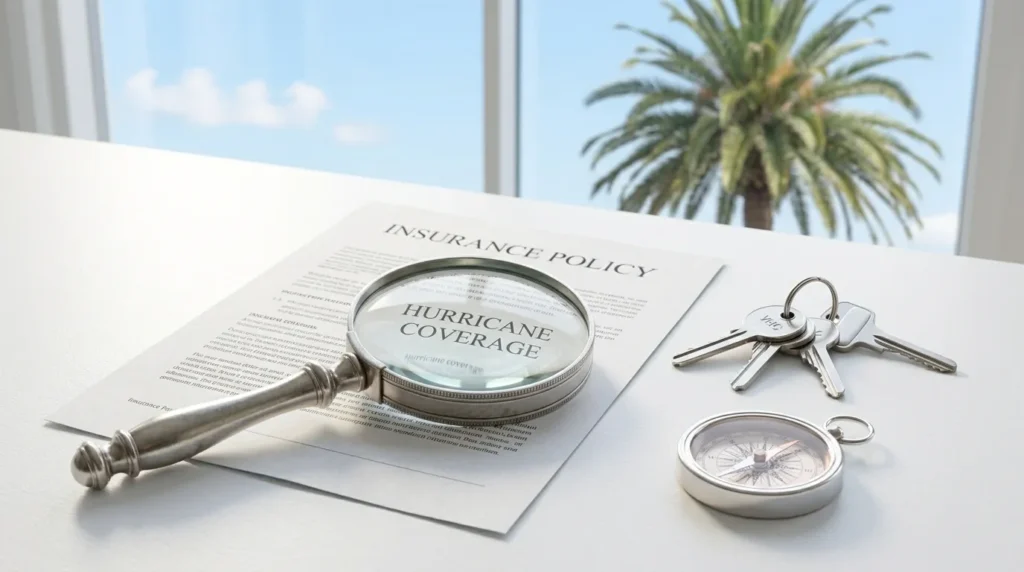
Does homeowners insurance cover hurricane damage? Yes, damage caused by high-velocity winds and wind-driven rain, but it almost universally excludes damage caused by rising surface water or storm surges. I spend my days policing this specific distinction because it is the number one reason for total claim denials in coastal states like Florida, Texas, and Louisiana. Most people assume that because a hurricane is a single event, the entire loss should fall under one policy. I am the Insurance Cop, and I am here to tell you that the industry treats wind and water as two completely different financial entities. If you are asking will my insurance cover hurricane damage, you have to understand that your standard policy is only half of the shield you actually need.
In the 2026 market, I am seeing a massive shift in how carriers handle these high-stakes claims. According to recent data from S&P Global Market Intelligence, the cost of hurricane-related property damage has spiked by 20 percent since 2024 due to the rising price of specialized coastal labor and high-wind-rated materials. I have policed far too many cases where a family’s policy said they were covered, but their limits were based on outdated construction math. This is why I am so insistent that you use my Replacement Cost Calculator to verify your dwelling limits. Rebuilding a home to 2026 high-velocity hurricane zone codes is significantly more expensive than it was even two years ago.
As I detailed in the on does homeowners insurance cover natural disasters guide, hurricanes are unique because they trigger specialized deductibles. You won’t find a flat 1,000 dollar deductible for these events in most coastal areas. Instead, you will likely see a percentage-based requirement that can reach 5 percent or 10 percent of your home value. My goal today is to give you a tactical roadmap to navigate the complexity of coastal protection. We will look at why your location dictates the math of your contract and how to ensure you aren’t left with a massive out-of-pocket deficit after the storm.
Is a hurricane considered a standard peril in your policy?
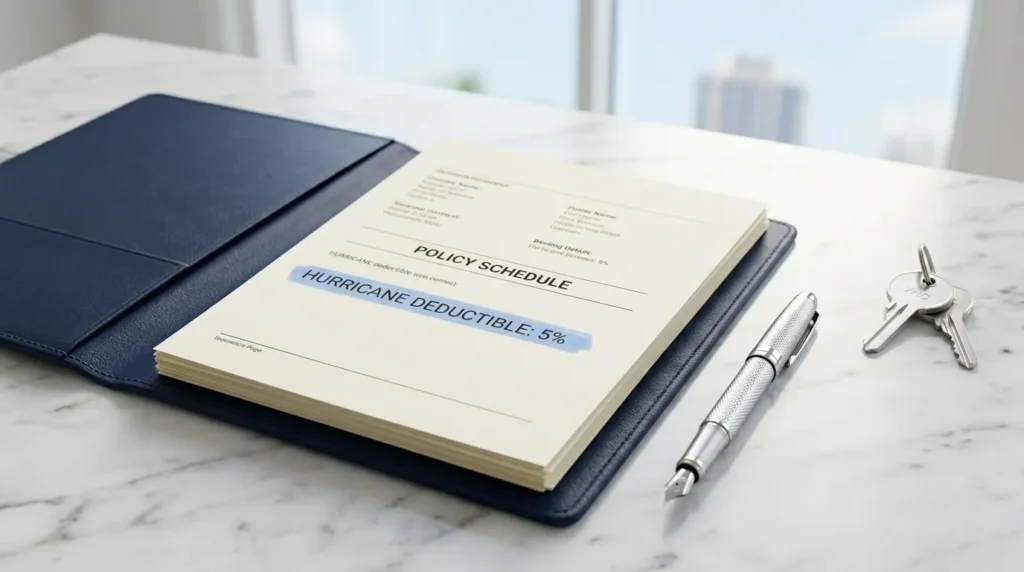
A hurricane is covered under the windstorm and hail peril in a standard homeowners policy, but in most coastal states, this protection is subject to a separate, much higher hurricane deductible. I have policed thousands of insurance contracts, and I noticed that people often get confused because their declarations page lists a standard deductible for things like fire damage or lightning strikes, but then features a much larger number for hurricanes. This is a foundational part of your protection, but the way your carrier pays for that damage is where the math becomes dangerous. You do not need to buy a separate hurricane policy for wind, but you absolutely must understand the technical triggers that make this specific section of your contract active.
When a hurricane hits, it often creates a chain reaction of other perils. For instance, the high winds might knock a tree onto your garage, which then triggers your Coverage B (Other Structures) limit. As I explain in my master guide on does homeowners insurance cover natural disasters, the insurance company will look for the proximate cause of the loss to determine which math applies. If a hurricane-force wind starts a fire by knocking down a power line, the carrier might process the loss as a fire damage claim. I have policed cases where this sequencing saved the homeowner thousands in deductible costs. If you aren’t sure how these perils overlap, you should refer to my master guide on how to change homeowners insurance to find a provider that simplifies this process.
It is also important to remember that hurricanes often travel with secondary threats like tornadoes. While both are wind events, some policies in states like North Carolina have different rules for a named storm versus a standard windstorm. I have also seen homeowners lose money because they didn’t realize their furniture was only covered for the 16 named perils, not the broader standard that protects the house structure. Even if the wind doesn’t destroy your home, the resulting smoke damage from a nearby storm-related fire is usually covered, but only if you meet the specific soot and ash definitions in your contract. By policing these triggers now, you are making sure your safety net is actually made of iron.
Why is the wind vs flood distinction the most important hurricane rule?

The wind vs flood rule is a critical technicality where homeowners insurance pays for damage caused by wind-driven rain entering through a structural opening, but excludes any damage caused by rising groundwater or storm surges. I spend a significant amount of time policing this distinction at Guide to Home Insurance because it is the most common reason for total claim denials after a hurricane. If the wind rips a shingle off your roof and water leaks into your bedroom, that is a wind claim. But if a storm surge pushes three inches of water under your front door, that is a flood. In the eyes of the law, these are two completely different events, and your standard policy math will not apply to the water on the ground.
This legal boundary is managed through the anti concurrent causation clause, which I have flagged as a major risk in the master guide on does homeowners insurance cover natural disasters. This clause allows insurers to deny a claim if a covered peril and an excluded peril contribute to a loss at the same time. I have policed cases where a hurricane caused both 100 mph winds and a six-foot storm surge. Because the carrier argued the floodwater was involved in the structural failure, they refused to pay for the wind damage as well. This is why I am so insistent that you maintain a separate flood policy. You need to be prepared to prove exactly how the water entered your home before the adjuster even arrives.
According to Ken Graham, the Director of the U.S. National Weather Service (NWS), the speed and scale of storm surges are reaching levels that older homes were never built to withstand. He has noted that while homeowners focus on the wind speed, the water is what often causes the most structural instability. I recommend checking your flood zone today because the climate patterns of 2026 are bringing water to areas that were previously considered safe. I have policed the data from FEMA, and they report that just one inch of water can cause $25,000 in damage. By policing the difference between a storm and a flood now, you can secure the right endorsements before the next system develops. I am here to help you navigate these clashing definitions.
How does hurricane deductible math affect your out of pocket costs?

Hurricane deductible math is calculated as a percentage of your homes dwelling limit, which often results in out of pocket costs ranging from $5,000 to over $25,000 before your insurance coverage begins. I spend a lot of time at Guide to Home Insurance policing these specific numbers because they are the primary source of financial shock for homeowners after a major event. While a standard deductible might be a flat 1,000 dollars, a 2 percent hurricane deductible on a 500,000 dollar home means you are responsible for the first 10,000 dollars of repairs. In the current 2026 hard market, carriers are using these percentage levers to shift more financial risk onto you.
I have policed the latest policy filings and noticed that many carriers are quietly increasing these percentages during an automatic renewal. If you are asking does homeowners insurance cover hurricane damage, you must look at your declarations page for the specific hurricane percentage. I have seen homeowners who thought they had a 1 percent deductible find out it was increased to 5 percent without their active approval. This is the loyalty penalty in action. You should use my Replacement Cost Calculator to see the actual dollar value of your percentage deductible based on current 2026 home values. Knowing this number today is the only way to build a proper emergency fund.
According to Tasha Carter, the Insurance Consumer Advocate for Florida, these high deductibles are a major hurdle for middle-market recovery. She has noted that as home values rise, your out of pocket liability increases automatically even if the percentage stays the same. I recommend that you refer to my master guide on how to change homeowners insurance if you find that your hurricane deductible has become unmanageable. Some carriers still offer a flat dollar deductible in certain regions, but you have to be proactive to find them. By understanding the math of your hurricane damage insurance claim now, you are taking control of your financial destiny. I am here to make sure you have the data you need to hold the industry accountable.
Why do 2026 building codes increase hurricane repair costs?
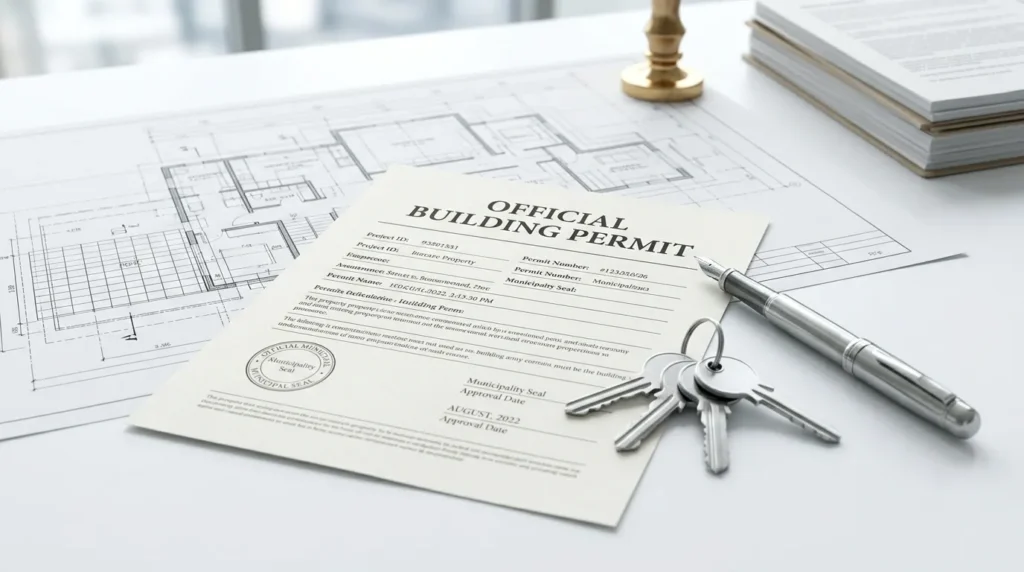
Building codes increase hurricane repair costs because they legally require you to rebuild using modern safety standards, such as hurricane straps and impact-resistant glass, which can cost thousands more than the materials originally used in your home. I have policed many cases where a homeowner was blindsided by the gap between what their insurer offered and what the local building inspector demanded. Standard policies are built on the principle of like kind and quality, which means the carrier only wants to pay for what you had before the storm. If your local municipality has updated its requirements for wind resistance since your house was built, you are responsible for paying the difference.
This technical math is a primary reason why I am so insistent on the details in my master guide on does homeowners insurance cover natural disasters. I have found that homeowners in coastal regions are at the highest risk for these out of pocket costs. For instance, if a hurricane causes structural failure, the city might require you to install a secondary water barrier or modern storm shutters to meet 2026 codes. The insurance carrier will only pay for standard windows, leaving you with a multi thousand dollar bill for the legal upgrades. This same logic applies to other weather events like wind damage to roof or even a roof collapse from snow in colder regions.
According to data from the Insurance Institute for Business and Home Safety, also known as IBHS, implementing modern building codes can reduce property damage by up to 65 percent. However, they also note that these improvements come with a price tag that the average household is not prepared to pay. I have policed the data and found that the average cost of code compliance after a large claim has risen by 15 percent in the last three years. You need to check your declarations page for a line item called Ordinance or Law coverage. This is the only part of your policy that pays for these mandatory upgrades. If you find that your current policy limits this protection to a small percentage, you are taking a massive financial risk with your equity.
How does homeowners insurance handle hurricane evacuation and ALE?

Homeowners insurance provides funds for evacuation costs and temporary housing under the Additional Living Expenses (ALE) section, but only if the evacuation was triggered by a covered peril or a mandatory order from a civil authority. I spend a lot of time policing these ALE accounts because people often run out of money during the chaotic days following a hurricane. If the local police or fire department issues a mandatory evacuation order, your policy should pay for your hotel and meals even if your house is never touched by the storm. However, I have seen carriers deny these claims if the evacuation was voluntary or if the homeowner left before the official order was signed.
I recommend that you follow my guide on how long to keep homeowner insurance policies to track all your receipts for these expenses. In the 2026 market, where hotel rates in safe zones can triple during a hurricane, your ALE limit is more important than ever. If your home is actually damaged and becomes uninhabitable, the insurer owes you for the cost of maintaining your normal standard of living. This includes things like laundry and pet boarding. I have policed cases where families were stuck in a hotel for six months, and their 12-month ALE window was the only thing preventing them from financial ruin. You should also refer to my guide on how to change homeowners insurance with escrow to ensure your lender is aware of your displacement.
According to reports from United Policyholders, ALE is one of the most underutilized sections of a homeowners policy. Many people don’t realize they have a bucket of money waiting for them the moment they are forced to leave their property. I suggest checking your Coverage D limits in the hub guide on does homeowners insurance cover natural disasters to see if you need to increase this specific shield. If you find yourself evacuated, take a photo of the official order from the news or the local sheriff. This is the forensic evidence you will need to get your claim approved. By understanding how ALE works before the wind starts to howl, you are policing your own recovery and ensuring that your family stays safe without draining your savings.
How should you document hurricane damage for a successful claim?

You must document every inch of hurricane damage using high-resolution video and photos before you touch any debris or start temporary repairs, ensuring you have a chronological record of the loss to present to your adjuster. I have policed hundreds of claims where the homeowner lost out on a fair settlement because they started the cleanup process too early. In the world of property insurance, your evidence is your only currency. Before the insurance company sends their representative, you need to be your own private investigator. I have seen cases where subtle structural shifts were ignored by the carrier because the homeowner didn’t have the before and after evidence. This level of detail is exactly what I emphasize when people ask does homeowners insurance cover hurricane damage.
I suggest starting with a wide angle video of the entire property and then moving in for close ups of specific items like shattered windows or torn siding. If the hurricane caused water damage, you need to show exactly how the water entered. This is the wind vs flood insurance battle I mentioned earlier. If you can show the water dripping from a hole in the roof, you win. If you only show water on the floor, you might lose. I have policed data showing that homeowners who provide a comprehensive digital evidence package see their claims processed 25 percent faster. You should also refer to my guide on how to find my homeowners insurance if you need to recover your policy details in a hurry after a disaster.
According to a recent claims satisfaction report from JD Power, the most satisfied claimants are the ones who maintained a meticulous communication log. I want you to write down every time you speak with an adjuster and exactly what they said. I have policed cases where verbal promises were made and then forgotten by the carrier. If you are dealing with a total loss, you will also need to address your personal property in homeowners insurance limits. Keep every receipt for your hotel and meals in a dedicated file. Documentation is the only way to ensure your restoration is fully funded. As I discuss in my master guide on does homeowners insurance cover natural disasters, the burden of proof is 100 percent on you. Don’t let the stress of a hurricane stop you from being the advocate your home deserves.
Why is the coastal insurance market becoming harder for homeowners in 2026?
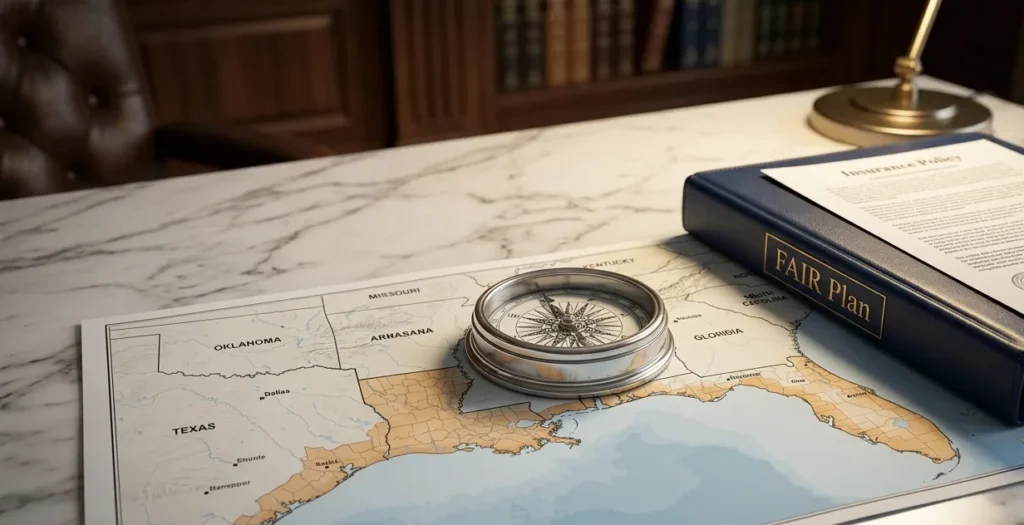
The coastal insurance market is becoming harder because private carriers are reducing their risk appetite in disaster-prone areas, leading to skyrocketing premiums and a surge in non-renewals. I spend a vast majority of my time at Guide to Home Insurance policing these non-renewal clusters because they leave homeowners in a desperate search for a new shield. In states like Florida and California, I am seeing entire zip codes being dropped by major carriers. If you receive a non-renewal notice, it doesn’t necessarily mean your home is uninsurable; it means the carrier’s internal risk math has shifted. This is a primary driver of the current coastal insurance hard market.
According to Ricardo Lara, the Insurance Commissioner for California, the intensification of weather events is forcing a total recalibration of the industry. He has noted that as private carriers pull back, state-backed insurers of last resort, like the FAIR Plan, are seeing record enrollment. I have policed the data and found that these plans are often more expensive and provide less coverage than a standard policy. If you are forced onto a FAIR plan, you will likely need a companion policy to cover theft and liability. If you find your current carrier is pricing you out of your home, you should follow my roadmap on how to change homeowners insurance to find a specialized provider that still has an appetite for your geography.
I also want you to be aware of the new 2026 requirements for wind mitigation credits. In many states, you are legally entitled to significant premium discounts if your home has hurricane straps, a secondary water barrier, or impact-resistant glass. I have policed cases where homeowners were paying a 15 percent loyalty penalty simply because they hadn’t updated their wind mitigation report in three years. I suggest you hire a licensed inspector to verify your home’s resilience today. This small investment can save you thousands of dollars on your next automatic renewal. By understanding the shifts in the coastal market now, you can secure the right endorsements before the next named storm arrives. I am here to help you navigate these complex choices so you can stay secure.
Frequently asked questions and expert answers on hurricane coverage
I know that the technical math of hurricane coverage can be overwhelming, especially when the clouds are starting to gather. To help you maintain control during your recovery, I have gathered the five most critical technical questions I receive regarding hurricane damage. These answers are designed to provide you with the data-driven clarity you need to ensure your recovery is fully funded.
1. Does homeowners insurance cover my boat if it is damaged in a hurricane?
No, a standard homeowners insurance policy typically provides very little to no coverage for boats, especially if the damage occurs while the boat is on the water. Some policies offer a tiny sub-limit, often 1,000 dollars, for small watercraft on your property, but this rarely covers the value of a modern boat. To protect your vessel, you must carry a separate marine insurance policy. I have policed cases where homeowners were shocked to find they had zero protection for their jet skis or boats after a storm. I recommend checking your policy exclusions in the master guide on does homeowners insurance cover natural disasters to see how your other assets are shielded.
2. Can I be denied for hurricane damage if I didn’t board up my windows?
While most policies don’t explicitly require you to board up your windows, every contract includes a duty to mitigate further loss. If a storm is approaching and you take zero action to protect the property, the carrier might argue that you were negligent. I have policed scenarios where carriers tried to reduce a payout because the homeowner left a sliding glass door unlocked during a hurricane. I suggest you document your preparation efforts, such as taking photos of your shutters or plywood before the wind hits. This proves to the adjuster that you were a responsible manager of the risk. You should also check my guide on does homeowners insurance cover hail damage to roof areas since hail and hurricane winds often overlap.
3. Will my insurance pay for a full new roof if a hurricane only removes a few shingles?
This depends entirely on your state’s matching laws and the specific language in your policy. In some regions, the carrier is legally required to replace the entire roof if they cannot find a matching material for the repair. However, in the 2026 market, many carriers are adding cosmetic damage exclusions during their automatic renewal cycles. This means they may only pay for a patch repair that works but looks mismatched. I spend a lot of time policing these endorsements because they can slash your home’s resale value. You should check your policy for any mention of windstorm coverage limits before you file your claim.
4. What happens if a hurricane destroys my home but my insurance limit is too low?
This is the nightmare of underinsurance. If your Coverage A limit is lower than the actual cost to rebuild, you are responsible for the financial gap. I have policed data showing that many coastal homeowners are 20 percent underinsured because they haven’t used a Replacement Cost Calculator in years. If this happens, your only legal levers are checking for an Extended Replacement Cost endorsement or an Inflation Guard. If you don’t have those, you may be forced to downsize. This is why I am so insistent that you audit your math today. You should also refer to my guide on do you get a refund if you cancel homeowners insurance if you find that you need to move to a safer location after a total loss.
5. Does homeowners insurance cover tree removal after a hurricane?
Yes, but the coverage is usually capped at 500 to 1,000 dollars per storm, and only if the tree has fallen on a covered structure or is blocking a primary access point like a driveway. If a hurricane blows down ten trees in your yard but they don’t hit the house, the insurer will likely pay zero dollars for the removal. I spend a lot of time auditing these tree struck by lightning insurance and wind claims because the cost of a professional crew is often much higher than the policy sub-limit. I suggest you have a plan for these out of pocket costs before the season starts.
Policing your coastal security
The primary takeaway from my research is that while homeowners insurance provides a foundational shield against hurricanes, your financial safety depends on your ability to manage the wind vs flood distinction and the high out of pocket math of percentage deductibles. I spend my days at Guide to Home Insurance digging into these technicalities because I know that a generic policy is often a weak one in a hard market. Hurricanes are not just a weather event; they are a direct threat to your solvency if you are relying on outdated coverage limits or hidden exclusions in the fine print. My goal is to move you from a passive policyholder to an active advocate for your own property.
I have policed the latest data for 2026, and the trend is clear: the industry is becoming more restrictive. Whether you are dealing with the aftermath of a storm or preparing for a winter event like ice damage, you have to be vigilant about your math. The carrier only owes you what is written in the contract. I recommend that you audit your declarations page today to ensure that your dwelling and personal property limits reflect the actual cost of restoration in your specific area. If you find that your current carrier is no longer providing the value you need, you should follow my roadmap on how to change homeowners insurance to find a provider that respects your budget.
The bottom line is that the time to police your hurricane coverage is now, not when the water is rising. You have the right to a policy that actually protects your equity. You should also refer back to the guide on does homeowners insurance cover natural disasters to see how your regional risks stack up. I am on duty to help you navigate these complex choices so you can stay safe, secure, and fully funded. Don’t let a technicality in the fine print be the thing that ruins your 2026 recovery.
[Next Step] Run the math for your hurricane shield
Now that you understand exactly how does homeowners insurance cover hurricane damage, it is time to verify if your limits are ready for the 2026 season. In my research, I have seen too many families discover their dwelling coverage is 75,000 dollars short only after a storm has hit. Most insurers use national algorithms that don’t account for the high cost of coastal contractors in a post-catastrophe environment.
Before the next named storm develops, use my Free Replacement Cost Calculator Toolkit. It gives you the local, zip code specific math you need to police your own policy. You can get precise estimates for your:
- Total 2026 Rebuild Value for your house
- Actual Local Roof and Window Replacement Costs
- HVAC and Modern System Installation Valuations