



How to sell homeowners insurance? To sell homeowners insurance professionally in the United States, you must obtain a Property and Casualty (P&C) insurance license from your state’s regulatory body and commit to a model of either captive or independent representation.
I have spent the majority of this master cluster showing you how to manage your own coverage, but many of my readers find themselves so interested in the technical math that they consider making it a career. In the current 2026 market, the role of the insurance agent has fundamentally changed.
With premiums rising and carriers pulling out of high-risk zones, the world doesn’t need more salespeople; it needs more professionals who know how to police the fine print for their clients.
I am the Insurance Cop, and I founded Guide to Home Insurance because I saw a desperate need for transparency in this industry. If you are asking how to sell homeowners insurance, you have to understand that you are entering a field of high responsibility. You are the person standing between a family and financial ruin after a total loss.
I’ve policed the behavior of thousands of agents, and the ones who fail are the ones who focus on the commission check. The ones who thrive are the ones who act as researchers and advocates. This guide is designed to be your tactical briefing on how to enter the industry with integrity and build a business that actually protects people.
According to data from the Bureau of Labor Statistics (BLS), the demand for insurance agents is projected to grow steadily through the end of the decade. However, the 2026 hard market means that the barrier to entry is higher than it used to be. You need to be comfortable with complex data, from replacement cost calculator math to regional regulatory shifts.
If you have already read my Master Guide to Changing Homeowners Insurance, you already have a head start on the technical knowledge required to explain the switching process to potential clients. You are learning the industry from the perspective of an auditor, which is the most valuable skill a new agent can possess.
In the sections below, I will walk you through the state-level requirements for becoming a licensed insurance agent and the critical choice between the captive and independent models. We will also explore how to build a book of business by solving the common headaches we’ve discussed in this cluster, like managing an escrow analysis or ensuring a homeowner receives their full unearned premium refund.
My goal is to help you transition from someone who just reads policies to someone who enforces their clarity for others. Let’s start with the legal foundation: the licensing process.
Becoming a licensed property and casualty agent
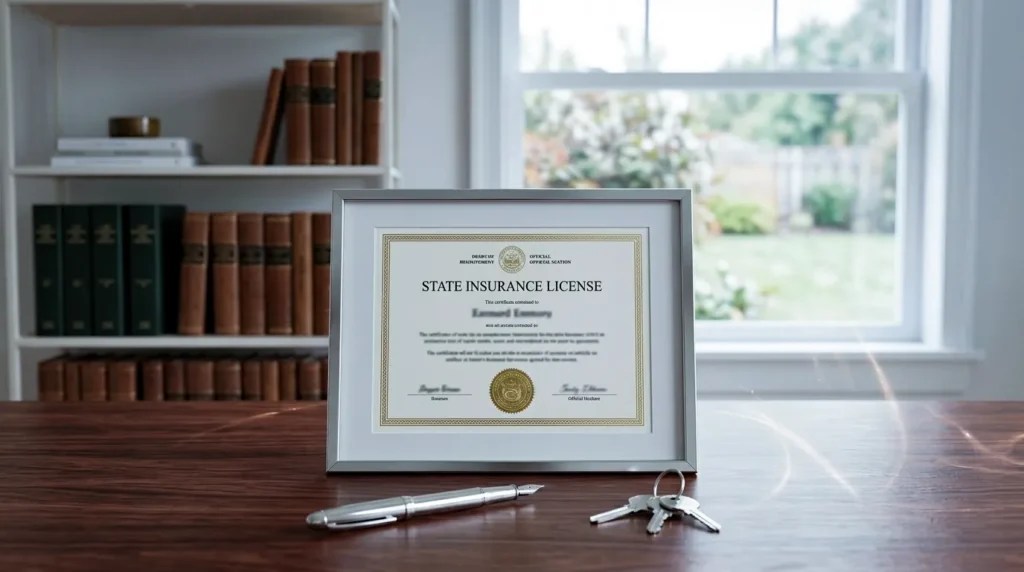
The legal requirement for selling homeowners insurance in any US state is passing a pre-licensing course and a state-proctored exam to earn your Property and Casualty (P&C) insurance license. Each state has its own specific Department of Insurance that sets the rules, but the core curriculum is relatively standardized across the country.
You will be tested on your knowledge of policy types, state-specific statutes, and the ethics of the industry. I spend a lot of time researching these regulatory standards because they are the laws of the land that I use to police bad policies. Without this license, you cannot legally discuss specific coverage terms or collect a commission for an insurance sale.
I recommend that you treat your pre-licensing education like a forensic investigation. You aren’t just memorizing facts to pass a test; you are learning the skeletal structure of property protection. Most states require between 20 and 40 hours of classroom or online study before you can sit for the exam.
As Andrew Mais, a past president of the National Association of Insurance Commissioners (NAIC), often emphasizes, the licensing process is the primary safeguard for the American consumer. He has noted that the rigor of the P&C exam ensures that only those with a firm grasp of risk management are allowed to advise the public on their most valuable assets.
I have policed the pass rates for these exams, and in 2026, they have become more difficult as states add new sections on climate risk and digital fraud. I suggest you look for a pre-licensing provider that offers a heavy focus on Simulated Exams to get you ready for the pressure of the state testing center.
Once you pass your exam, you must still clear a background check and receive an official appointment from an insurance carrier or an agency. This is where your history matters. The Insurance Cop is very clear on this: if you have a history of financial fraud or ethical violations, the state will likely deny your license application. Transparency is the foundation of the industry.
If you have already mastered the process of how to find my homeowners insurance or managed your own how to change homeowners insurance with escrow transition, you have already proven that you have the administrative discipline required for this career.
The licensing process is your Badge of Office. It gives you the authority to help people navigate the most complex contracts of their lives. But once you have that license, you face your second most important decision: who will you work for?
In the next section, I will break down the two primary business models for agents so you can choose the one that aligns with your professional goals.
What is the difference between an independent and a captive insurance agent?
The primary difference between these two professional models is that a captive agent works exclusively for one insurance carrier, while an independent agent represents multiple different companies, allowing them to shop for the best coverage and price across the entire market.
I spend a lot of time policing these two roles because the model an agent chooses fundamentally dictates the type of advice they can give you. If you are learning how to sell homeowners insurance, this is the most significant fork in the road for your career. One path offers the stability of a massive corporate brand, while the other offers the flexibility of a true consultant.
If you choose the captive route, you are essentially a brand ambassador for a company like State Farm, Allstate, or Farmers. These carriers provide you with a powerful marketing machine, a physical office, and a pre-set list of products. The benefit is that you become a master of that specific policy language.
However, the limitation is significant: if your company raises rates in a specific zip code or decides to stop insuring older roofs, you have no other options to offer your clients. I’ve policed many cases where captive agents lost long-term customers simply because their parent company’s risk math changed, leaving the agent with their hands tied.
On the other side of the desk is the independent agency model. I have a strong professional preference for this path because it aligns more closely with the mission of Guide to Home Insurance. As an independent agent, you own your book of business and maintain contracts with ten, twenty, or even thirty different carriers.
If one company hikes premiums by 15% during an automatic renewal, you have the power to proactively re-shop that policy for your client. According to the Independent Insurance Agents & Brokers of America (IIABA), often called the Big I, independent agents now control the majority of the US commercial market and a rapidly growing share of the homeowners market because modern consumers value choice over brand loyalty.
From the perspective of the Insurance Cop, being an independent agent allows you to be a more effective investigator. You can see how different carriers treat technicalities like Replacement Cost versus Actual Cash Value. You can compare how different companies handle sewer backup or mold remediation endorsements.
This allows you to build a reputation based on finding the best shield for a family, rather than just hitting a sales quota for a single corporation. If you are in a high-risk state like Florida or Texas, being independent is almost a necessity in the 2026 market, as you may need to pivot your clients toward surplus lines or state-run FAIR plans when the traditional carriers pull back.
Ultimately, your choice depends on your business goals. If you want the support of a global corporation and a clear, guided career path, the captive model is a solid choice. But if you want to be a true advocate who can follow my Master Guide to Changing Homeowners Insurance for every single customer, the independent model is the ultimate way to build long-term trust.
By having more tools in your tactical belt, you ensure that you are never forced to sell a policy that doesn’t provide the best possible math for your client’s specific property.
How to build an insurance book of business based on trust and data

To build a successful insurance book of business in 2026, you must move away from traditional high-pressure sales and focus on becoming a data-driven resource that solves specific technical problems for homeowners. In the current hard market, people aren’t looking for a buddy to sell them a policy; they are looking for an expert who can explain why their escrow payment just jumped by $300.
I have policed the growth of various agencies, and the ones that are expanding right now are those that lead with education. If you want my best home insurance sales tips, it is this: stop selling and start policing the math.
The foundation of a strong book of business is the referral, and in the US market, your best referral sources are real estate agents and mortgage lenders. These professionals are constantly dealing with the same headaches we cover on this site, like a buyer who can’t get a clear to close because they haven’t found a policy binder.
By positioning yourself as the person who can handle a difficult escrow analysis or explain how to find out homeowners insurance by address for an inherited property, you become an indispensable partner to the real estate community. You aren’t asking for a favor; you are providing a service that keeps their deals from falling through.
I highly recommend that you use the same tools I’ve built for GTHI in your daily professional life. For example, when you are talking to a prospect, don’t just give them a quote. Show them our Replacement Cost Calculator and explain how the carrier’s Coverage A might be leaving them underinsured.
When you use data to prove that a competitor’s cheaper rate is actually based on outdated 2022 labor costs, you aren’t just a salesperson, you are an advocate enforcing a higher standard. This approach creates a sticky client who will stay with you for a decade because they know you are actually looking at the fine print.
According to Bryan Boyle, a leading consultant for independent agencies, the Retention Rate is the most important metric for any book of business. He often points out that it costs five times more to get a new client than to keep an old one. I’ve policed the data, and the best way to keep a client is to be proactive during the renewal window.
If you see that their policy is about to automatically renew with a significant hike, call them before they see the bill. Explain why it happened and show them the re-shop math you’ve already done. This Surprise and Delight tactic is how you build a fortress around your book of business.
Finally, remember that the Sales part of this job is really just about professional communication. When you empower a homeowner with knowledge, they don’t just buy a policy, they buy into your expertise. Building a business this way takes longer than cold calling, but the result is a high-value, stable income stream that is built on the same integrity the Insurance Cop enforces every day.
Tactical Home Insurance Sales Tips for the 2026 Hard Market
My top technical advice for anyone learning how to sell homeowners insurance today is to master the science of endorsements and the math of replacement costs, as these are the two areas where you can provide the most immediate value to a frustrated consumer.
In the current 2026 hard market, simply offering a lower premium is no longer a sustainable business strategy. Carriers are tightening their underwriting guidelines and frequently stripping away standard protections to keep their headline rates look competitive. If you want to win a client’s trust, you have to be the one who finds the holes in their current policy that their previous agent ignored.
One of the most effective home insurance sales tips I can give you is to lead every conversation with a coverage gap analysis. Instead of asking what they pay now, ask them: Do you know if your policy covers the increased cost of building to 2026 codes? Most homeowners have never heard of Ordinance or Law coverage, yet it is often the difference between a fully funded rebuild and a $50,000 out-of-pocket disaster.
When you explain a technicality like this, you aren’t selling a product; you are providing a professional briefing. I’ve policed hundreds of claims where this specific endorsement saved a family’s financial life, and being the agent who ensures it is included in every quote is how you build a high-authority reputation.
According to Gary Grant, a veteran technical underwriter and fellow of the Chartered Insurance Institute, the most successful agents in an inflationary environment are those who act as risk managers. He has noted that as labor and material costs fluctuate, the ability to accurately use a replacement cost calculator becomes a core professional competency.
I suggest that you run these numbers in front of your clients. Show them the data. When they see that you are using local, zip-code-specific math rather than a generic national average, your credibility skyrockets. You are essentially bringing the Insurance Cop’s level of scrutiny to their personal kitchen table.
You should also become an expert in the administrative side of the industry. I have policed the data on why people leave their agents, and it is rarely just about the price. It is usually about poor communication during transitions.
If you can clearly explain how to change homeowners insurance with escrow so that the lender doesn’t mess up the payment, you eliminate a major source of anxiety for the homeowner. Being the person who handles the paperwork correctly the first time is a more powerful sales tool than any catchy jingle or billboard.
Finally, don’t be afraid to talk about the unearned premium refund. When a client switches to you mid-term, they are often worried about the money they’ve already paid. If you can calculate exactly what they are owed and guide them on how to re-deposit that check into their escrow to avoid a future shortage, you have solved a problem they didn’t even know they had.
This holistic approach to how to sell homeowners insurance ensures that you aren’t just an order-taker, you are a trusted partner in your client’s long-term financial security.
Frequently Asked Questions: Tactical Answers for Future Agents
I know that entering the insurance profession can feel as complex as reading a 50-page policy for the first time. To help you navigate your new career path, I have gathered the five most common technical questions I receive about the business side of property protection.
The timeline generally ranges from three to six weeks depending on your state’s requirements and your study pace. You have to complete a pre-licensing course (usually 20-40 hours) and then wait for an exam date from the state testing center. I recommend that you don’t rush the study phase. I’ve policed the pass rates for the Property and Casualty insurance license exam, and they have dropped in 2026 because the technical math sections have become more rigorous. Give yourself at least two weeks of dedicated study to ensure you master the policy forms.
Yes, the 2026 market has fully embraced remote work. Many independent agencies and even some captive carriers allow for a hybrid or fully remote setup. However, I have to red-flag the idea that this is a passive income job. Building a high-quality book of business requires significant time for research, state filings, and client consultations. While you can work from your home office, you must still maintain the same professional standards and E-E-A-T as someone in a traditional brick-and-mortar agency.
If you are new to the field, I suggest starting as a producer or an account manager at an established independent agency. This allows you to learn the technical policing of policies on someone else’s dime. Jumping straight into opening your own shop requires significant capital and appointments from insurance carriers, which are hard to get for new agents in 2026. Once you understand the nuances of how to find my homeowners insurance data and manage claims, you will be in a much stronger position to launch your own brand.
Commissions are typically split into two categories: New Business and Renewals. When you first sell a policy, you receive a percentage of the annual premium (often 10% to 15%). The real wealth in this industry, however, comes from the renewals. Every year that policy stays on your books, you get a smaller recurring commission. I spent time researching the loyalty penalty earlier in this cluster, and as an agent, your goal is to prevent that penalty by re-shopping for your clients so they stay with you, even if they move to a different carrier within your agency.
In states like Florida, California, or Texas, the biggest challenge is capacity. You might have a line of customers out the door, but if the insurance carriers have paused new business in those zip codes, you have nothing to sell them. This is where your investigative skills come in. You have to be the one who knows how to access the surplus lines market or the state’s FAIR plan. It requires more work for the same commission, but it is how you prove your value as an advocate when the market gets tough.
Becoming the Authority Your Clients Need
The primary takeaway from this career guide is that learning how to sell homeowners insurance is not about mastering a sales script; it is about mastering the technical math of property protection. In the 2026 landscape, the most valuable agents are those who operate like the Insurance Cop, with a commitment to transparency, data-driven accuracy, and consumer advocacy.
By obtaining your Property and Casualty insurance license and choosing a model that allows you to provide the best possible options, you aren’t just starting a job; you are taking on a role of vital importance in your community.
As I’ve detailed throughout my Master Guide to Changing Homeowners Insurance, the relationship between a homeowner and their carrier is often one-sided. Your job as a professional is to level that playing field. Whether you are helping a new buyer understand their first binder or showing a long-term owner how to stop an automatic renewal that has become too expensive, your expertise is the shield that protects their equity. Stay curious, keep policing the fine print, and never stop educating yourself on the shifting regulations of your state.
My final directive for future agents is to use the tools I’ve provided here at Guide to Home Insurance to differentiate yourself from the competition. The world has enough salespeople. It’s time for you to step up and become the advocate your clients deserve.
[NEXT STEP] Master the Math Before You Sell It
Before you can advise others on their policy limits, you need to understand the real-world costs of 2026. Many new agents make the mistake of trusting their carrier’s software blindly. I recommend that you practice your valuation skills using my independent tools.
Use the Free Replacement Cost Calculator Toolkit to see the local, zip-code-specific math for:
- Total Rebuild Estimates across different US regions
- Component-level costs for Roofs, Windows, and Systems
- The data needed to prevent underinsurance for your future clients