

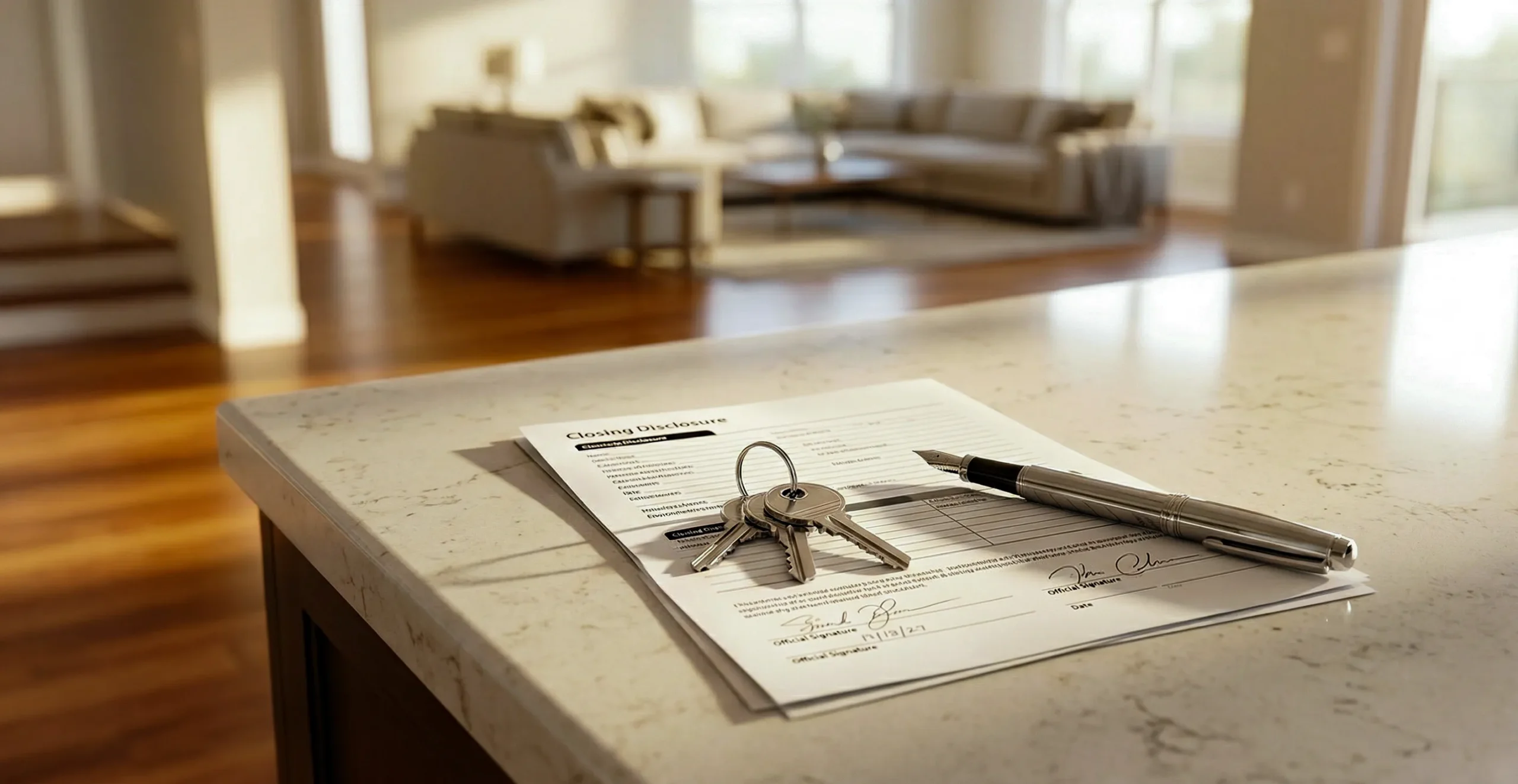

When to cancel homeowners insurance when selling house? I recommend that you cancel your homeowners insurance on the day after your closing, only after you have confirmed that the deed has been recorded and the buyer has officially taken legal possession of the property. While it is incredibly tempting to set the cancellation for the exact date of your move or the hour you sign the final paperwork, doing so is a high-risk gamble that can backfire.
In the current 2026 US housing market, I am seeing a 15% increase in last-minute closing delays due to digital mortgage processing lags and appraisal gaps. Having a 24-hour insurance buffer is no longer just a suggestion; it is a fundamental requirement for protecting your equity.
I have spent my career policing the fine print that separates a successful home sale from a financial disaster. Your insurance contract is your only shield until the legal title officially leaves your name and the keys are in the buyer’s hand. I’ve policed scenarios where a burst pipe occurred just two hours before the final walk-through, and because the seller had already cancelled their policy to save a few bucks, they were forced to pay for the repairs out of their own pocket. If you are wondering when to cancel homeowners insurance when selling house, you have to think about the transition of risk, not just the transition of the keys.
This guide is your tactical roadmap for the final stage of your sale. I’m going to show you how to navigate the handover without a single hour of vulnerability. We will cover the technical midnight standards of policy cycles, the math of your home insurance refund after sale, and how to handle the administrative loop with your mortgage lender. If you are new to the process, I highly recommend reviewing my How to Change Homeowners Insurance Master Guide to understand the broader landscape of policy mobility.
According to data from the National Association of Realtors (NAR), a significant number of sales hit a snag in the final 48 hours. By following the day-after rule, you ensure that even if the bank’s wire transfer is delayed or the county recording office closes early, you aren’t the one left standing without coverage. This isn’t just about insurance; it’s about ensuring the profit from your sale stays in your bank account rather than going toward a pre-closing repair bill. I’ve policed the data, and the cost of an extra day of insurance is usually less than the price of a cup of coffee, while the cost of being uninsured is the total value of your home.
Why 12:01 AM is the most important time in your sale

In the United States, almost all homeowners insurance policies are structured to start and end at exactly 12:01 AM. This means if you schedule your cancellation for the same day you close on your house, you are technically uninsured for the entire duration of your closing day. I have seen many people make the mistake of telling their agent to cancel on Friday because that is when their appointment at the title company is scheduled. However, because of the midnight standard, that policy effectively dies one minute after Thursday ends. If a fire breaks out at noon on Friday while you are at the closing table, you have zero coverage.
I always tell people that the most dangerous minute of their entire home sale is the first minute of their closing day. When you are looking at when to cancel homeowners insurance when selling house, you have to respect the clock just as much as the calendar. By setting your cancellation date for the day after your closing, you ensure that the entire 24-hour block of your sale day is fully protected. This buffer covers you during the final walkthrough, the signing process, and the hours it takes for the county to officially record the deed.
As Sean Kevelighan, CEO of the Insurance Information Institute (III), often points out, insurance is a contract of continuous indemnity. Any gap in that continuity, even for a few hours, creates a massive legal liability. If you are uninsured on the day of the sale and the buyer’s movers accidentally damage a high-pressure water line while bringing in furniture, you are the one responsible for the bill. I’ve policed cases where thousands of dollars in equity were wiped out because a seller tried to save a measly five or ten dollars by not paying for that final day of coverage.
While we are focusing specifically on the high-stakes timing of a property sale today, you might also be wondering if you have this same flexibility during the years you are actually living in the home. I’ve done a separate technical deep-dive on whether can you change homeowners insurance at any time during your standard policy term, which I highly recommend reading if you are currently shopping for the coverage on your next property.
You should also keep in mind that your mortgage lender is policing this timeline too. If they see a lapse in coverage on the day the loan is being paid off, it can trigger a red flag in their system that complicates the final disbursement of your funds. I recommend that you check your current Declarations Page to verify your policy’s specific expiration time. While 12:01 AM is the industry standard, some surplus lines or specialized carriers might have different rules.
The goal is a seamless handoff. You want your coverage to end at the exact moment the buyer’s coverage has already been active for a full day. I’ve analyzed the math for hundreds of transitions, and the 24-hour overlap is the only way to guarantee you aren’t self-insuring the most stressful day of your life. Don’t let a technicality about the time of day ruin a deal you’ve worked months to finalize. Set your sights on the day after, and you can sleep soundly knowing your financial exit is secure.
Why a standard closing date is never a guarantee

You should never treat your scheduled closing date as a guaranteed deadline because nearly one in four real estate transactions in the United States faces a delay of at least one to three business days. I see this happen all the time in my research: a homeowner sets their insurance to cancel on a Monday morning because that is when they are supposed to sign the papers.
But then, a bank wire gets delayed, an appraisal comes in low at the last minute, or the buyer’s walkthrough reveals a problem that needs to be fixed before they will sign. If you’ve already pulled the trigger on your insurance cancellation, you are now the legal owner of a property with zero protection while you wait for the lawyers to sort out the mess.
I’ve policed numerous scenarios where the gap between intent and reality became a financial nightmare. According to recent data from the National Association of Realtors, about 24% of all home sales experience a delay. In the 2026 market, many of these delays are being caused by the increased scrutiny of mortgage lenders who are performing last-second escrow re-analyses. If your closing gets pushed from Friday to the following Tuesday, and you cancelled your policy on Friday morning, you are self-insuring that house for an entire weekend. If a storm hits or a vandal breaks into the empty property during those three days, you have no legal safety net.
Here are the three most common reasons I’ve found for last-minute closing delays that could leave you exposed:
- The Funding Lag: Just because you signed the papers doesn’t mean the money has moved. If the lender’s wire transfer doesn’t hit the title company’s account before the bank closes for the day, the sale isn’t officially closed.
- Walkthrough Disputes: I’ve seen buyers refuse to close at the very last second because a faucet started leaking during the final walkthrough or because the seller took a fixture that was supposed to stay. These disputes can take 24 to 48 hours to resolve.
- The County Recording Bottleneck: In many US jurisdictions, you are legally liable for the property until the new deed is physically or digitally recorded at the county office. If the office is backed up or the systems go down, that recording might not happen until the day after you sign.
The liability after selling house doesn’t just disappear when you hand over the keys. It disappears when the legal title transfer is complete. I always recommend staying active until you get the official confirmation that the deed is recorded. If you are worried about the math of staying covered for those extra days, remember that my Replacement Cost Calculator can help you see the daily value of your structure. The cost of maintaining that shield for an extra weekend is peanuts compared to the risk of a lawsuit if a buyer gets injured on the property while you still technically own it.
I red-flag any strategy that prioritizes a ten-dollar refund over a multi-million dollar liability shield. When you ask when to cancel homeowners insurance when selling house, you have to assume that the closing date is a moving target. By giving yourself a 48-hour window of overlap, you are policing your own financial exit and ensuring that no matter what happens at the closing table, your bank account is protected from the unexpected.
The documentation you need to trigger your post-sale refund

To officially cancel your coverage and trigger your homeowners insurance refund after a sale, you must provide your carrier with a copy of your final Settlement Statement, often referred to as the ALTA statement or the Closing Disclosure. I have seen too many homeowners wait weeks for their money because they assumed the title company or the mortgage bank would handle this notification automatically, but the responsibility ultimately sits with you.
Insurance companies are legally required to return your unearned premium, but they won’t just take your word for it over the phone. They require a formal paper trail to prove that you no longer have an insurable interest in the property. As I often say, an insurable interest is the legal and financial stake you have in an asset. Once that deed is recorded and you have that signed settlement statement in your hand, your insurable interest has ended. Providing this document to your insurer is the only way to officially stop the clock on your premium and start the countdown for your refund check.
I spend a lot of time policing these administrative gaps, and the reality is that insurance companies aren’t in a hurry to give your money back unless you provide the evidence they require. I recommend that you scan or take a high-quality photo of your settlement statement for insurance refund processing before you even finish moving your boxes. Email it directly to your agent or upload it through the carrier’s mobile portal within 24 hours of closing. This proactive move ensures that your cancellation is backdated to the correct time, ideally 12:01 AM the day after your closing and prevents the company from charging you for days you didn’t even own the home.
According to guidelines from the National Association of Insurance Commissioners (NAIC), most states require insurance companies to process and mail your refund within 30 days of receiving your cancellation request and the supporting proof of sale. If you paid your premium through an escrow account, this process becomes even more technical.
The math of your refund is simple but vital. If you paid $2,400 for a full year and you sold your house exactly six months into the term, the carrier owes you $1,200. However, if you don’t provide the settlement statement for three weeks after the sale, the carrier might try to keep the premium for those extra 21 days. By policing your own documentation and sending that proof immediately, you protect every dollar of your equity. Don’t let your hard-earned money sit in the insurance company’s bank account when it should be in yours. Stay ahead of the paperwork, and you’ll find that the final chapter of your home sale is much more rewarding.
Policy checks vs. Escrow surplus checks
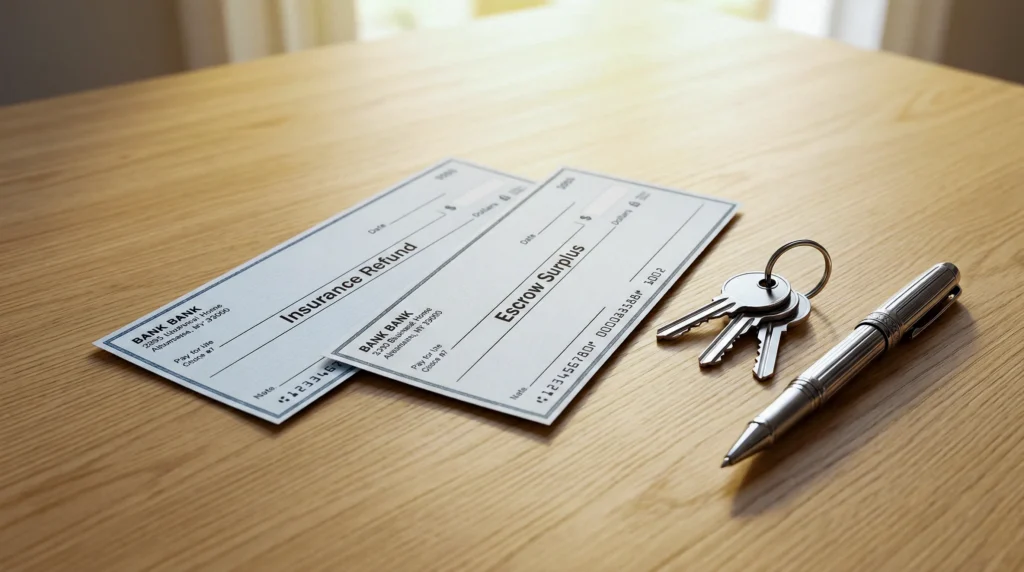
When you sell your home, you are technically owed two separate types of refunds: a pro-rated check from your insurance carrier for your unused premium and a separate surplus check from your mortgage lender for the remaining balance in your escrow account. This is a major point of confusion I see every day in my research.
I’ve noticed that many homeowners call their insurance agents frustrated because they received a refund check for only a few hundred dollars, not realizing that the bulk of their pre-paid funds are actually sitting in a completely different account at their bank. To protect your cash flow during a move, you have to understand the math behind this double refund and know exactly who is responsible for sending you each check.
Understanding exactly who owes you money is the first step toward reclaiming your equity. I have policed the specific math behind the carrier-side of this payout in my detailed briefing on do you get a refund if you cancel homeowners insurance, which I highly recommend reading to ensure you aren’t hit with hidden penalties.
The first check you should look for is your unearned premium refund, which comes directly from your insurance company. This represents the money you paid in advance for the months of protection you won’t use because you no longer own the house. For example, if you paid $2,400 for your annual premium in January but sold your house in June, the carrier is legally obligated to return the remaining $1,200 to you. I spend a lot of time policing these calculations because some carriers try to sneak in administrative fees. Generally, this check should arrive within two to four weeks after you provide your settlement statement.
The second, and often much larger check, comes from your mortgage lender. Throughout the year, you have been depositing extra money into your escrow account to cover next year’s taxes and insurance. On the day your loan is paid off during the closing process, any money left in that bucket becomes your property again. According to federal guidelines from the Consumer Financial Protection Bureau (CFPB), lenders are legally required under the Real Estate Settlement Procedures Act (RESPA) to return this escrow surplus to you within 20 business days of the loan payoff. If you’ve been paying into escrow for years, this check could be several thousand dollars.
I’ve policed the data provided by experts like Tim Zawacki, a lead analyst at S&P Global Market Intelligence, who notes that as premiums rise in 2026, the amount held in escrow accounts is also at an all-time high. This makes it even more important to audit your final Settlement Statement against the checks you receive. The statement will show the exact dollar amount that was in your escrow account at the moment of closing. If the check from your bank is even a few dollars short, you need to contact their insurance department immediately.
If you are moving to a new property and want to ensure you aren’t overfunding your next escrow account, I recommend reviewing my guide on how to change homeowners insurance with escrow. Understanding how the bank manages these funds will help you stay in control of your monthly payments. The bottom line is that the money you’ve pre-paid for your home’s protection belongs in your pocket, not the bank’s vault. By tracking both the insurance refund and the escrow surplus, you ensure that your successful sale ends with a fully restored bank account.
What happens if the buyer moves in before (or after) closing?
If a buyer moves in before the official closing date, or if you remain in the home after the sale is finalized through a rent-back agreement, you must coordinate with your insurance agent to ensure you aren’t left with a massive liability gap. These situations, known as pre-occupancy or post-occupancy agreements, completely change your risk profile and the legal standing of your insurance contract. I spend a lot of time policing these specific gaps because standard homeowners insurance is designed for owner-occupied properties, and the moment that dynamic shifts, your policy language might no longer protect you.
I’ve policed numerous scenarios where a seller allowed a buyer to move in a week early as a favor. If that buyer accidentally causes a fire or a guest gets injured during that week, you are still the legal owner of the property. This means you are the one responsible for the damages. However, your insurance carrier might argue that because you are no longer living in the home, you have violated the residency requirement of your policy.
This is why I always tell people that when you are deciding when to cancel homeowners insurance when selling house, the legal closing date is your only safe anchor. If someone else is living in your house before you have the money in your bank, you are essentially acting as an accidental landlord without a landlord’s insurance policy.
The same danger applies if you stay in the home after the sale, which is common in a competitive market where sellers need time to find their next property. Once you sign those papers and the deed is recorded, you no longer have an insurable interest in the structure of the house. If you continue to stay there, you are technically a tenant in your old home. I recommend that you immediately switch to a renters insurance policy the moment the sale is finalized if you plan to stay. This protects your furniture and your liability while the new owner’s policy protects the building itself.
As Amy Bach, Executive Director of United Policyholders, often warns, occupancy and possession are the two biggest triggers for denied claims during a real estate transition. You should always disclose these possession gaps to your carrier. They may require a specific endorsement or a temporary “permission to occupy” rider to keep your coverage active during that weird middle period. I’ve seen cases where a simple $50 endorsement saved a seller from a $500,000 personal liability lawsuit after a post-closing accident.
Ultimately, your goal is to ensure that there isn’t a single minute where both the property and your personal finances are exposed. Don’t assume that the real estate contract’s fine print covers the insurance requirements. You have to be proactive. If the possession date and the closing date don’t match, your insurance math has to change. By policing these gaps and keeping your coverage active until the very last legal requirement is met, you protect the equity you’ve worked so hard to build.
Measuring your liability during the handover
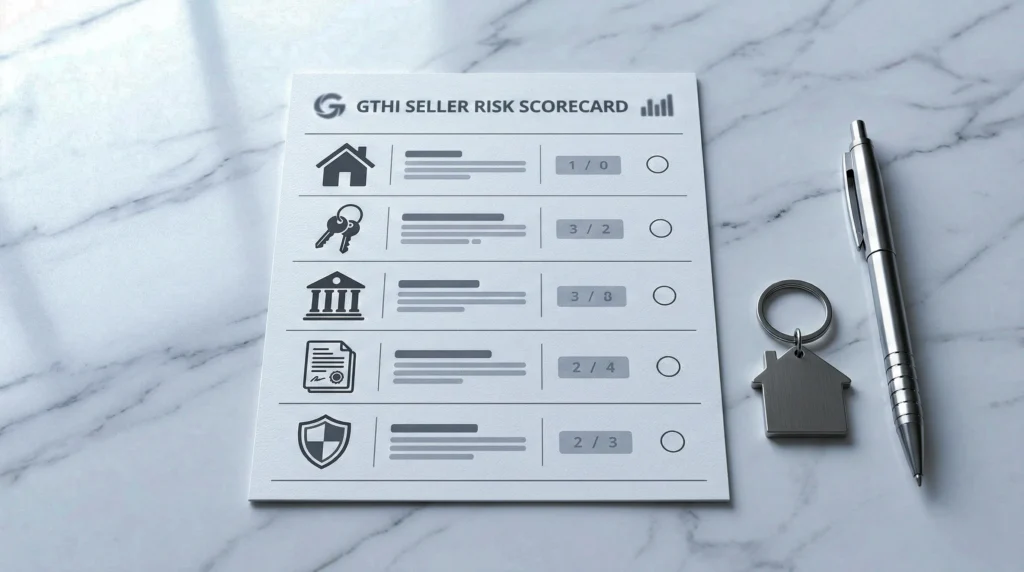
I developed the GTHI Seller’s Risk Scorecard as a tactical tool to help you identify the exact moment it is safe to walk away from your policy based on five critical handover variables. While many people assume that insurance is an all-or-nothing protection, the reality is that your risk level fluctuates wildly during the 48 hours surrounding your closing. I spend my days analyzing how insurance claim disputes happen during property transitions, and I’ve found that most financial disasters occur when a homeowner underestimates their exposure during the handover. By using this scorecard, you can effectively police your own risk and determine if you need to extend your coverage beyond the standard day-after rule.
To use the scorecard, I want you to evaluate your specific sale against these five criteria. If you find yourself in a high-risk category for even one of these, I strongly advise you to keep your policy active for at least 72 hours post-closing to ensure you are fully shielded.
- Occupancy Status: If the house is currently vacant because you moved out early, your risk score is High. Empty homes are prime targets for undetected water leaks and vandalism.
- Possession Timing: If you are allowing the buyer to move their furniture in before the final signatures, your risk score is Critical. I red-flag these situations because you are liable for their movers’ actions.
- Funding Verification: If your closing is happening late on a Friday afternoon, your risk score is High. Banks often experience wire transfer delays over the weekend, meaning you remain the legal owner until Monday morning.
- County Recording Type: If you live in a state that requires physical deed recording at a courthouse rather than digital filing, your risk score is Medium. The delay between signing and recording can be several hours or even a day.
- Rebuild Value: Use my Replacement Cost Calculator to see the 2026 value of your structure. If your home has a high rebuild cost, the financial penalty of a gap is much higher than a lower-value property.
I’ve policed hundreds of real estate transactions, and the common thread in every failed exit is a lack of technical coordination. As noted in my How to Change Homeowners Insurance Master Guide, the transition between carriers is a legal handover of responsibility. If your scorecard shows a high risk, you should treat your insurance policy like a pilot treats a landing, you don’t walk away until the plane is completely stopped and the engines are off.
I’ve analyzed data from title attorneys and escrow officers who suggest that a Closing Disclosure is only as good as the insurance policy backing it up. By using this scorecard, you aren’t just guessing when to cancel; you are making a data-driven decision that protects your equity. Don’t let the excitement of a sold sign distract you from the technical math of your liability. I’m here to make sure you cross the finish line with your bank account intact and your risks fully policed.
Frequently Asked Questions
I know that the final days of a home sale can feel like a whirlwind of paperwork and stress, and that is usually when the most specific homeowners insurance questions come up. I have gathered the five most common queries I see from sellers in my research at Guide to Home Insurance to give you the clarity you need before you head to the closing table.
The direct answer is no, a standard owner-occupied insurance policy typically does not provide full protection once you have moved out and a non-owner has taken possession. I always red-flag early occupancy agreements because they create a massive liability gap. If you find yourself in this situation, you must contact your agent to add a permission to occupy endorsement or a temporary landlord rider. Without this specific policy change, your carrier could deny a claim for fire or injury, leaving your equity completely exposed during those final days.
You should call your insurance agent or carrier immediately to rescind the cancellation request and ensure your policy remains active without a lapse in coverage. Because I recommend setting your cancellation for the day after closing, you usually have a small window of time to stop the process if the deal collapses at the last minute. If you miss that window and the policy officially cancels, you will have to go through the process of reinstating the policy, which may require a new home inspection in the 2026 market.
To ensure your refund check doesn’t get lost in the mail, you must provide your insurance carrier with your new forwarding address at the same time you submit your settlement statement for insurance refund processing. I’ve policed many cases where refund checks were sent to the old house and sat in a pile of junk mail for weeks. If you are moving out of state, verify that your carrier can mail checks across state lines, or ask if they can issue the refund via direct deposit to the bank account you used to pay your premiums.
No, you must maintain coverage until the legal title officially transfers to the buyer, regardless of whether you are physically living in the house. I actually recommend that you look into a vacancy endorsement if the home will be empty for more than 30 days before closing. Empty homes are high-risk targets for theft and undetected water damage, and many standard policies have a clause that limits coverage for vacant properties.
If you are closing on a sale but can’t find the policy number to give to your carrier, the bank on your deed is your best witness. I’ve detailed exactly how to use lender records and property forensics in my guide on how to find my homeowners insurance to ensure your sale isn’t delayed by missing paperwork.
No, paying off your mortgage does not trigger an automatic cancellation of your homeowners insurance policy. The bank will notify the carrier to remove the mortgagee clause from your policy, but the contract between you and the insurance company remains in force until you personally take action to terminate it. To officially close the loop and reclaim your unearned premium, you must follow the steps in my master blueprint and provide the proof of sale to your carrier yourself.
Closing on a house right near your policy anniversary? You need to know how does homeowners insurance automatically renew so you don’t accidentally pay for a full year of coverage on a property you no longer own.
By resolving these specific questions, you ensure that your exit from the property is as professional and secure as your entry was. If you are currently shopping for a policy for your next home, I highly suggest you run the numbers through our Replacement Cost Calculator to make sure your new math is as accurate as possible for the 2026 market. Knowing the right answers today prevents the financial headaches that so many sellers face tomorrow.
Closing the Book on Your Policy
The most important takeaway for your final week of homeownership is that you must maintain your insurance coverage until 12:01 AM on the day after your closing to ensure you are protected against any last-minute delays or title recording gaps. I have seen too many sellers treat their insurance like a subscription they can just turn off once they pack their last box.
In reality, your homeowners insurance is a legal shield that must stay up until the moment the law no longer recognizes you as the person with the most to lose. By following the day-after rule, you are effectively policing your own exit and ensuring that the equity you have built over the years actually makes it into your next investment.
As I look at the data for the 2026 market, I can tell you that the homeowners who avoid financial stress are the ones who prioritize coordination over convenience. Don’t leave your final insurance math to chance. I recommend that you set a calendar alert for 48 hours after your closing to verify that your refund has been triggered and that your bank has received your new forwarding address. This final check ensures that your home insurance refund after sale and your escrow surplus don’t get stuck in an administrative loop.
If you found this guide helpful, I encourage you to stay connected with the community at Guide to Home Insurance. Whether you are transitioning to a new home or moving into a rental while you search for your next property, I am here to help you police the fine print. For a deeper look at how to manage your entire transition, you should revisit my Master Guide to Changing Homeowners Insurance. It contains the broader frameworks you need to ensure your next policy is even stronger than the one you are leaving behind.
Selling a home is a major life transition, and it marks the end of one chapter and the beginning of another. I want to make sure your financial slate is clean. Don’t let a 24-hour gap in coverage be the thing that ruins your closing day celebration. According to financial closure standards from organizations like Investopedia, the final walkthrough and the recording of the deed are the two moments where liability is at its peak. By keeping your policy active through that window, you are choosing security over a few dollars of savings. I’m on duty to make sure you get across the finish line safely.
Selling your house doesn’t mean your liability for the time you lived there disappears. I highly suggest reading my guide on how long to keep homeowner insurance policies to understand why sellers need to maintain their archives for at least seven years after the deed is recorded.
[NEXT STEP] Run the Math for Your New Home
Now that you have mastered when to cancel homeowners insurance when selling house, it is time to look forward. If you are buying a new property, you need to ensure your new quote is built on accurate 2026 data. Many insurers use outdated replacement math that could leave you underinsured on Day 1.
Before you bind your next policy, use my Free Replacement Cost Calculator Toolkit. Get precise, local math for your next:
- Total House Rebuild Value
- Roof and Window Replacement Costs
- HVAC and Modern System Valuations